
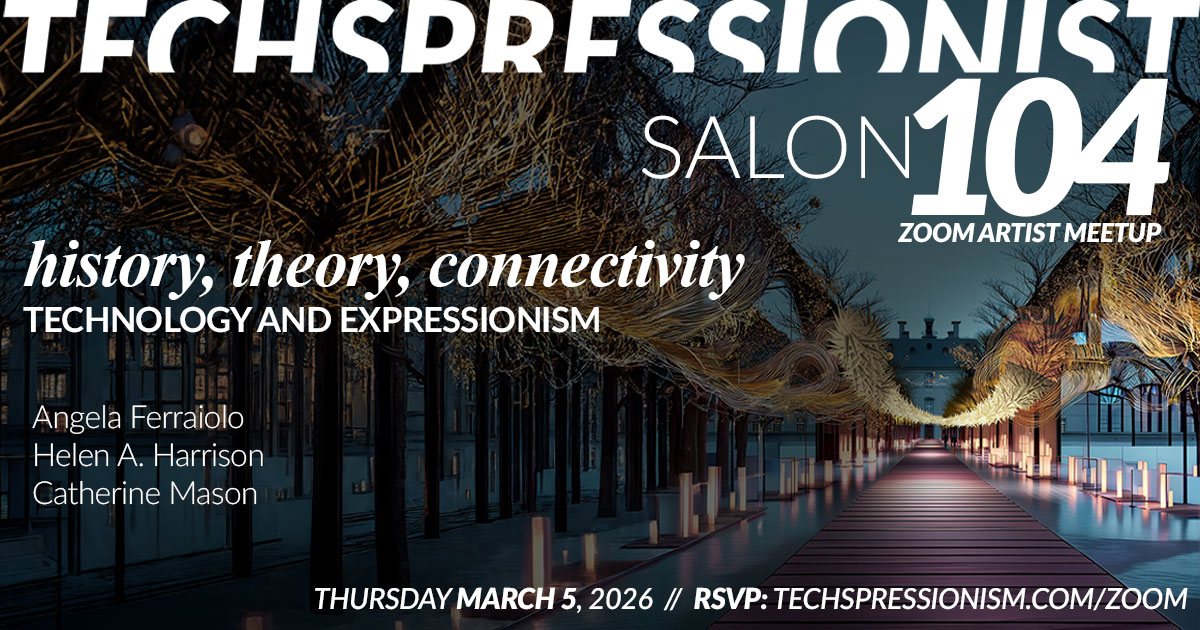
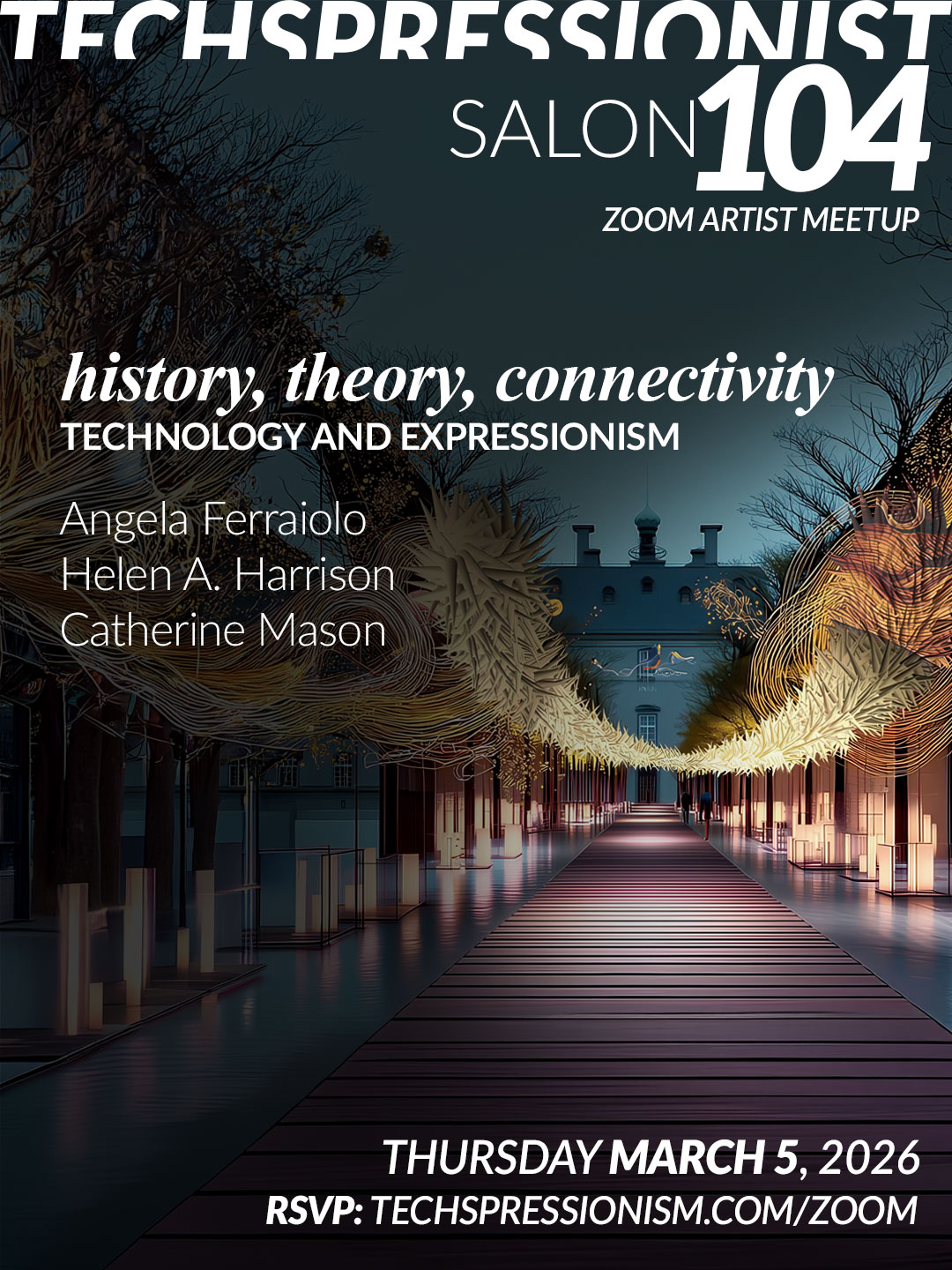
History, Theory, Connectivity
Techspressionist Salon 104
March 5, 2026
History, Theory, Connectivity invites you into a shared conversation about how tools, bodies, and ideas shape what we know and make, together. We’ll begin with an opening conversation between our three featured guests, situating the lens in the 1950s, when Abstract Expressionism and early computational experiments emerged in tandem. Then, 40 minutes of moderated dialogue among all three participants, followed by open discussion from all salon participants.
Moderator
Renata Janiszewska – Lion’s Head, Canada 

Renata Janiszewska is an artist who thrives across disciplines. She creates digital and analog works, brings still images to life, and composes music to accompany her visuals. As a moderator, she connects scholarly inquiry to studio practice. As well, she organizes salons and exhibitions. At The Dreamer’s Lair Studios, she’s at work on Artless, a forthcoming book of her artworks, which is anything but.
Renata will be joined by co-moderator Michael Pierre Price.
Guests in order of appearance:
Helen A. Harrison
Helen is an art historian, museum director, and journalist specializing in modern American art, with degrees from Adelphi University (A.B., studio art) and Case Western Reserve University (M.A., art history). She directed the Pollock-Krasner House and Study Center from 1990 until her retirement in 2024, previously curating at the Parrish Art Museum and Guild Hall, and leading Manhattan’s Public Art Preservation Committee. A longtime critic and author, she wrote for The New York Times (1978–2006), penned the “Eye on Art” column (2010–2020), and has contributed essays to leading journals and major exhibition catalogues. She has taught at the School of Visual Arts and Stony Brook University, lectured widely, and hosted “Art Waves” on WLIU 88.3 FM; she is also the author of five art-world mystery novels. She is a founder and advisor to Techspressionism. Helen lives in Sag Harbor, NY.
Catherine Mason
Catherine Mason was born in Australia, raised in the United States, and trained in Britain. She holds a History of Art degree from Birkbeck and a Master’s in Museums & Gallery Management from City University. A leading historian of computer and digital art since the CACHe Project in 2002, she has authored A Computer in the Art Room, co-edited White Heat, Cold Logic (MIT Press), and most recently published Creative Simulations (Springer). Her writing appears in outlets such as Studio International and Leonardo, and she has advised and served on panels for organizations including SIGGRAPH, The Art Fund, the British Computer Society, and the Lumen Art Prize. She has recently become a Visiting Research and Knowledge Exchange Fellow in the Department of Computing at Goldsmiths, University of London.
Angela Ferraiolo
Angela Ferraiolo is a systems artist focused on open-endedness, self-organization, morphogenesis, and adaptive processes. She has held a residency at the Intelligent Engineering Lab at Soka University in Tokyo and lectured for School of X/xCoAx in Weimar. Her professional background includes roles at RKO, H2O Studios, Westwood Studios, and Electronic Arts. Her work has been exhibited internationally at venues such as SIGGRAPH, ISEA, EVA, xCoAx, Art Machines 2, the New York Film Festival, Courtisane, AEFF, and the International Conference of Generative Art. Based in New York, she co-chairs visual and studio arts at Sarah Lawrence College, where she founded the computational arts program in new genres and is developing projects in adaptive systems and open-ended evolution.
Techspressionist Salons now incorporate Zoom translated captions, which enable users to have the speech in a meeting or webinar automatically translated in real-time to captions in another language. For example, if the speaker is speaking English in a meeting, captions can be made available in Spanish, Chinese, Ukrainian, and more. Many thanks to Cynthia Beth Rubin for taking the lead on this initiative. Instructions on how to enable translated captions are available for mobile and desktop.
FREE & OPEN TO THE PUBLIC.
Attendance is free,
but pre-registration is required.
Artists in attendance are always invited to share their work via screen-sharing.
Salon: 12 p.m.-1:30 p.m. Eastern Time.
Afterparty: After recording stops (1:30-???) – do you want to be on the Techspressionism advisory board? It’s the peeps at the afterparty.
If you would like to share your work via screen-sharing, please arrive at 11:45.
THIS JAM WILL BE RECORDED.
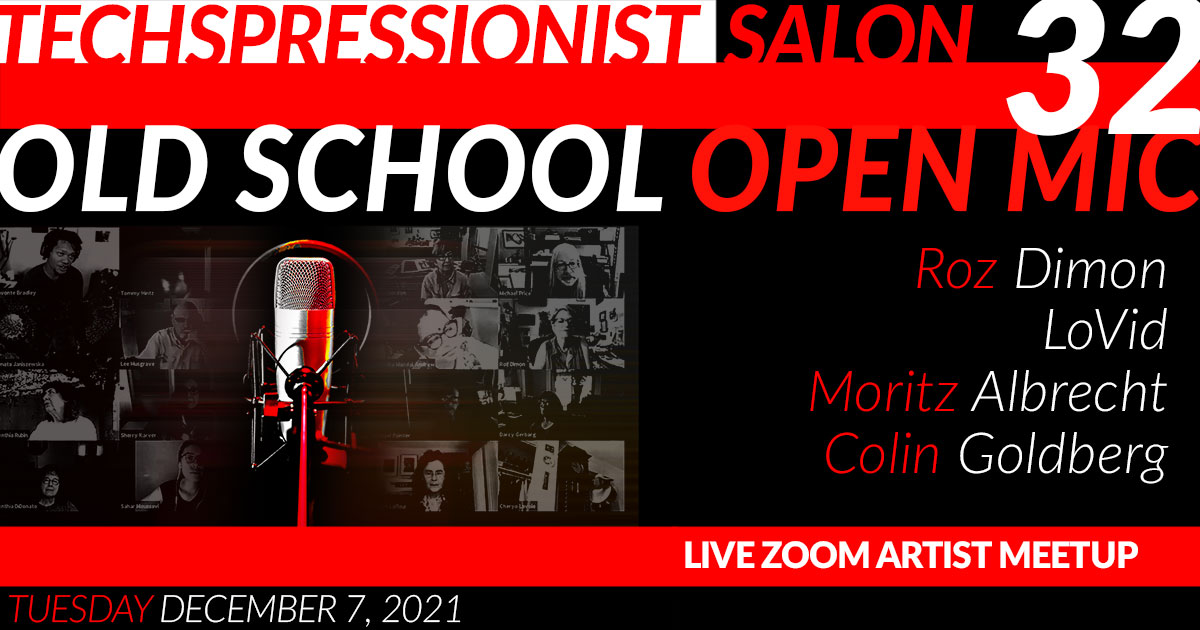
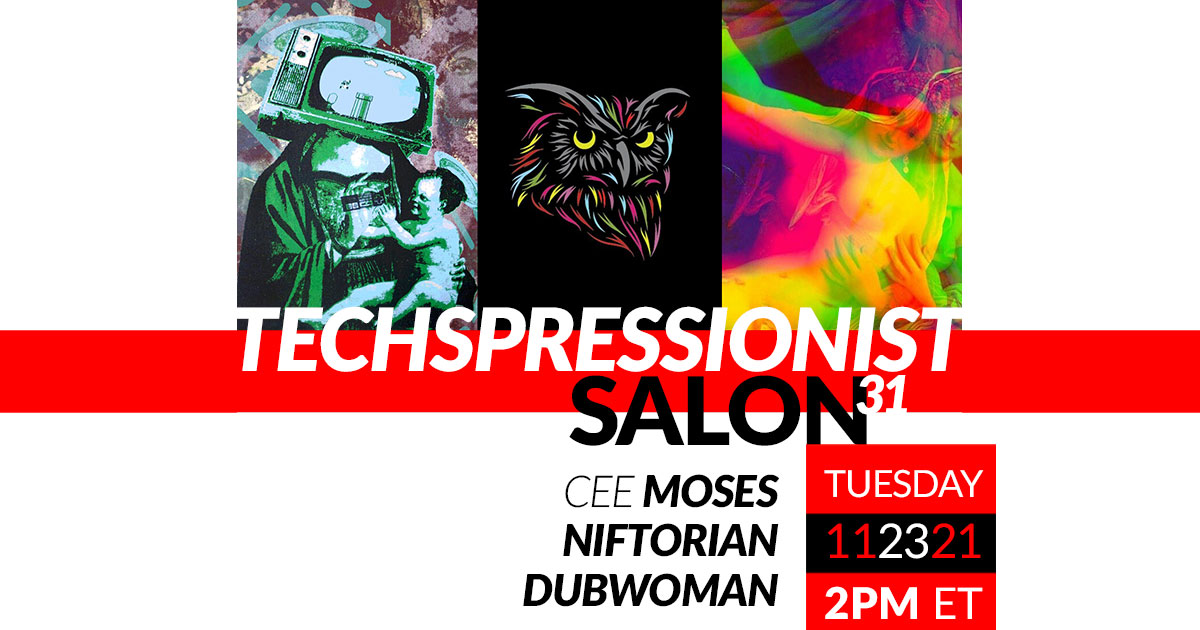
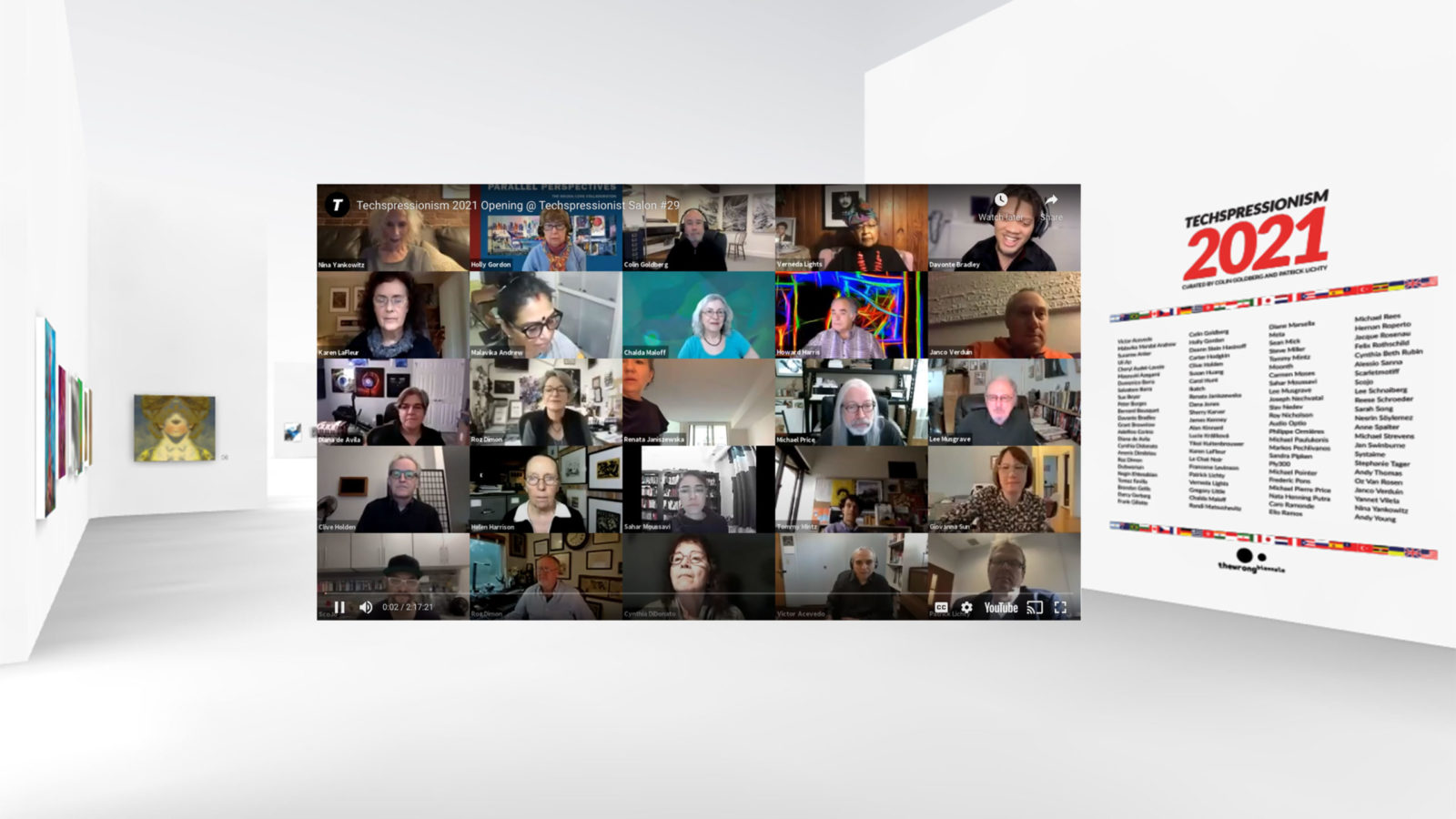
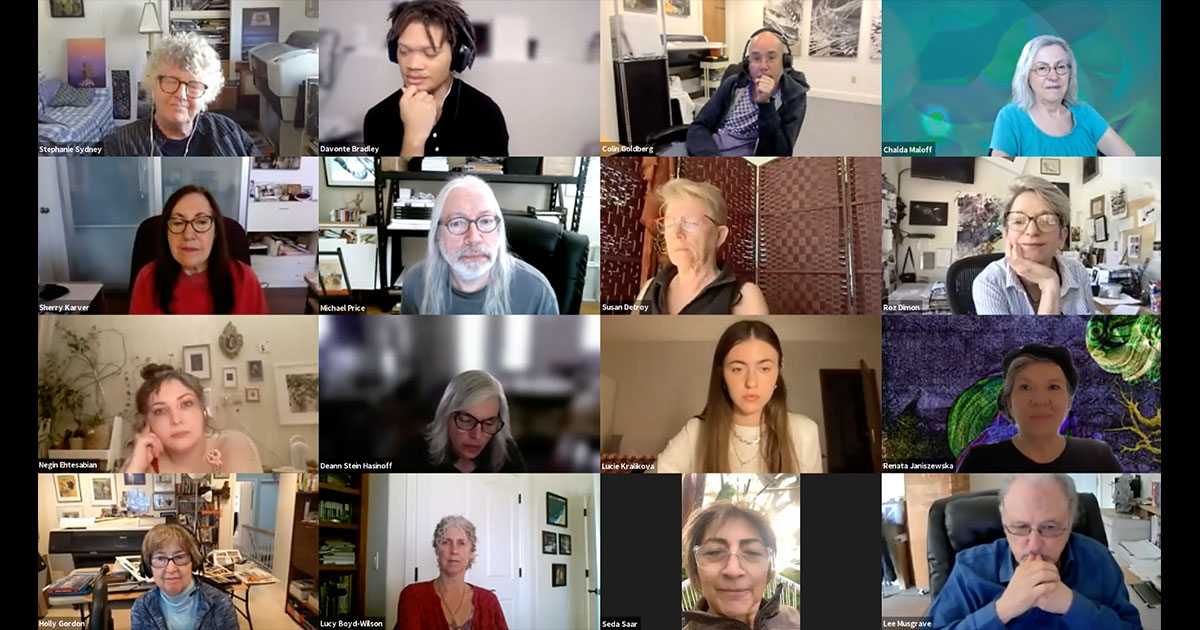
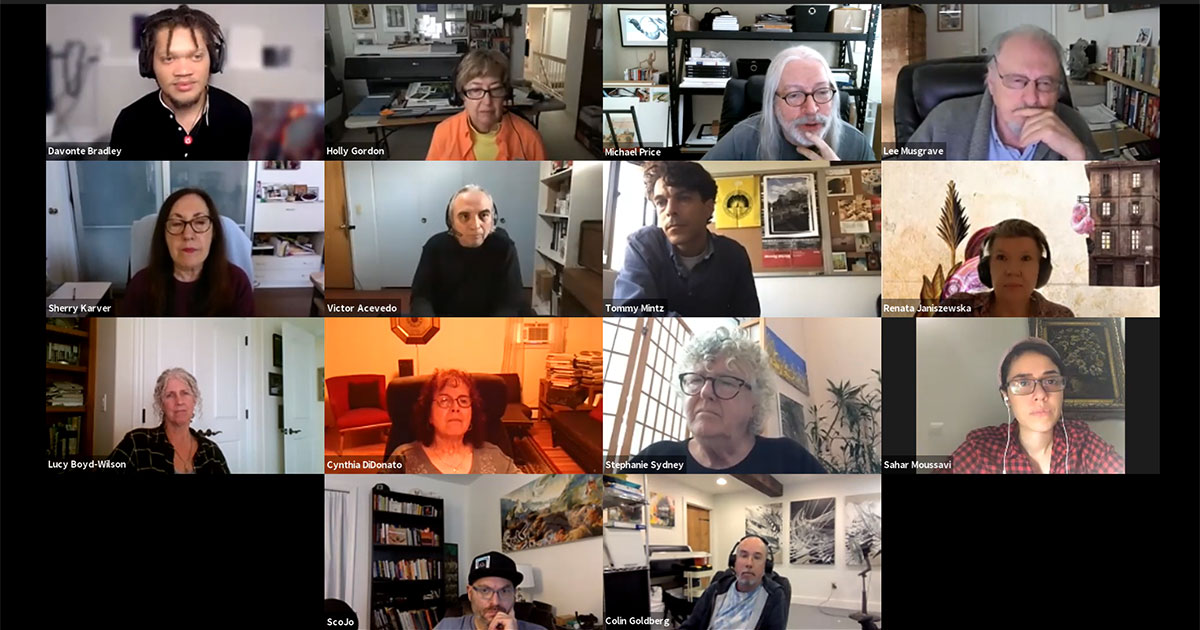
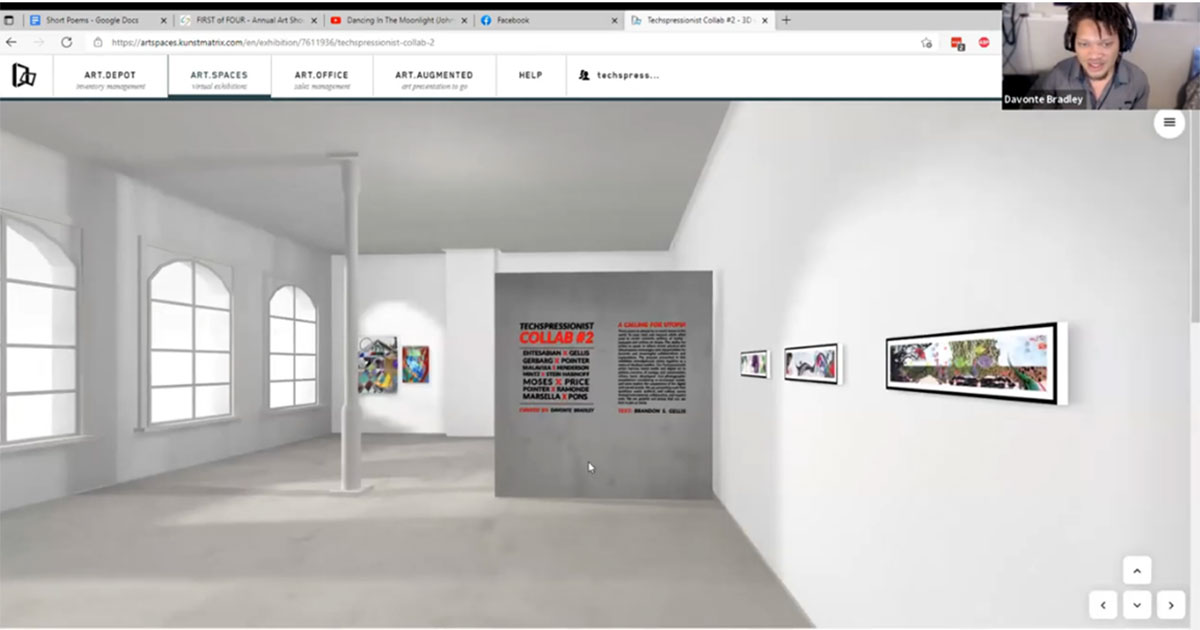
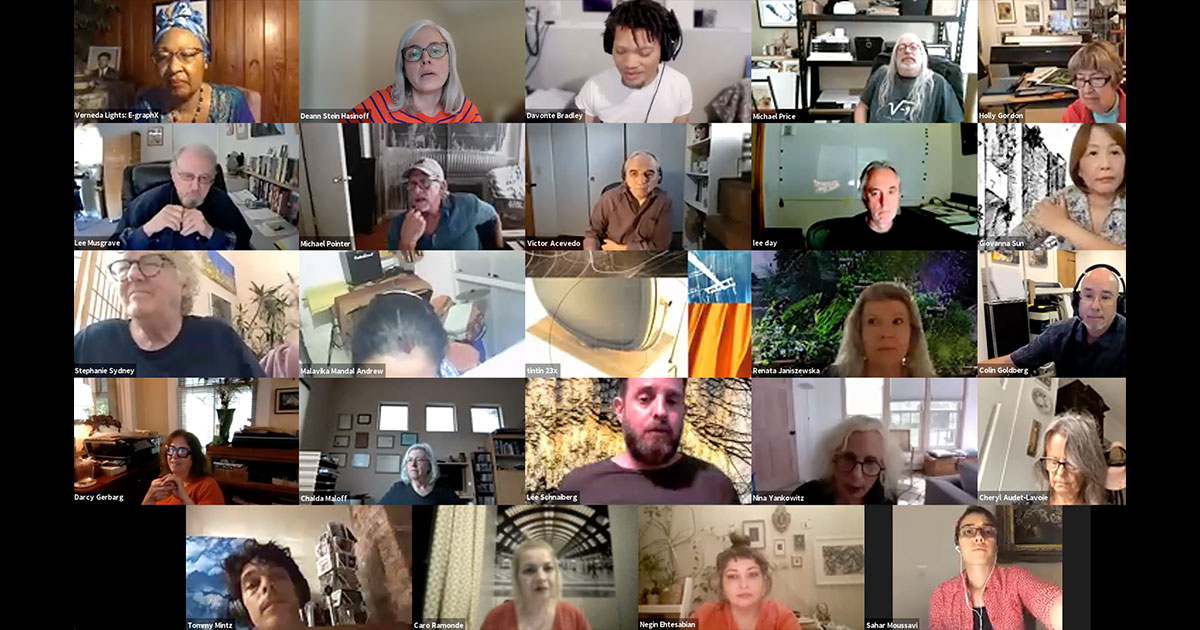
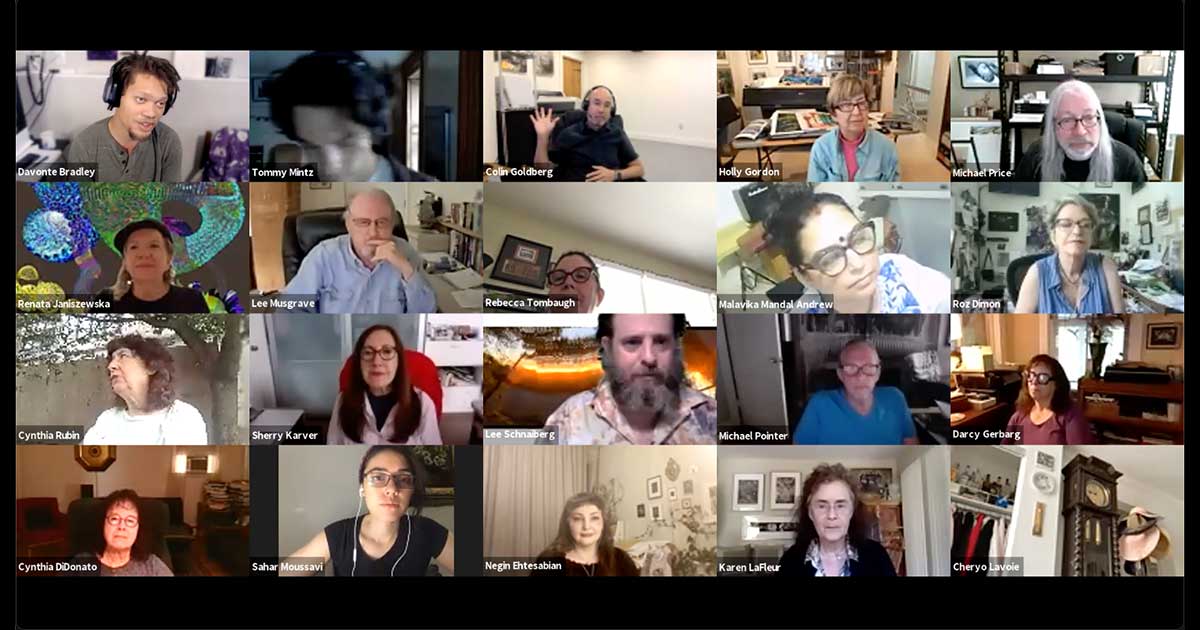
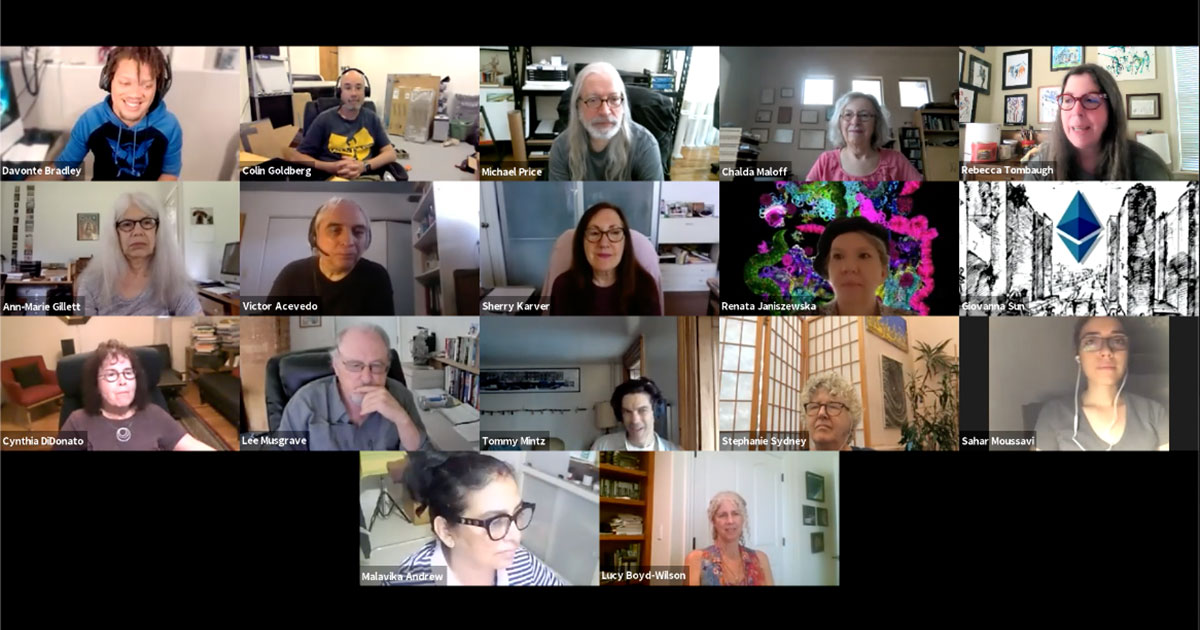
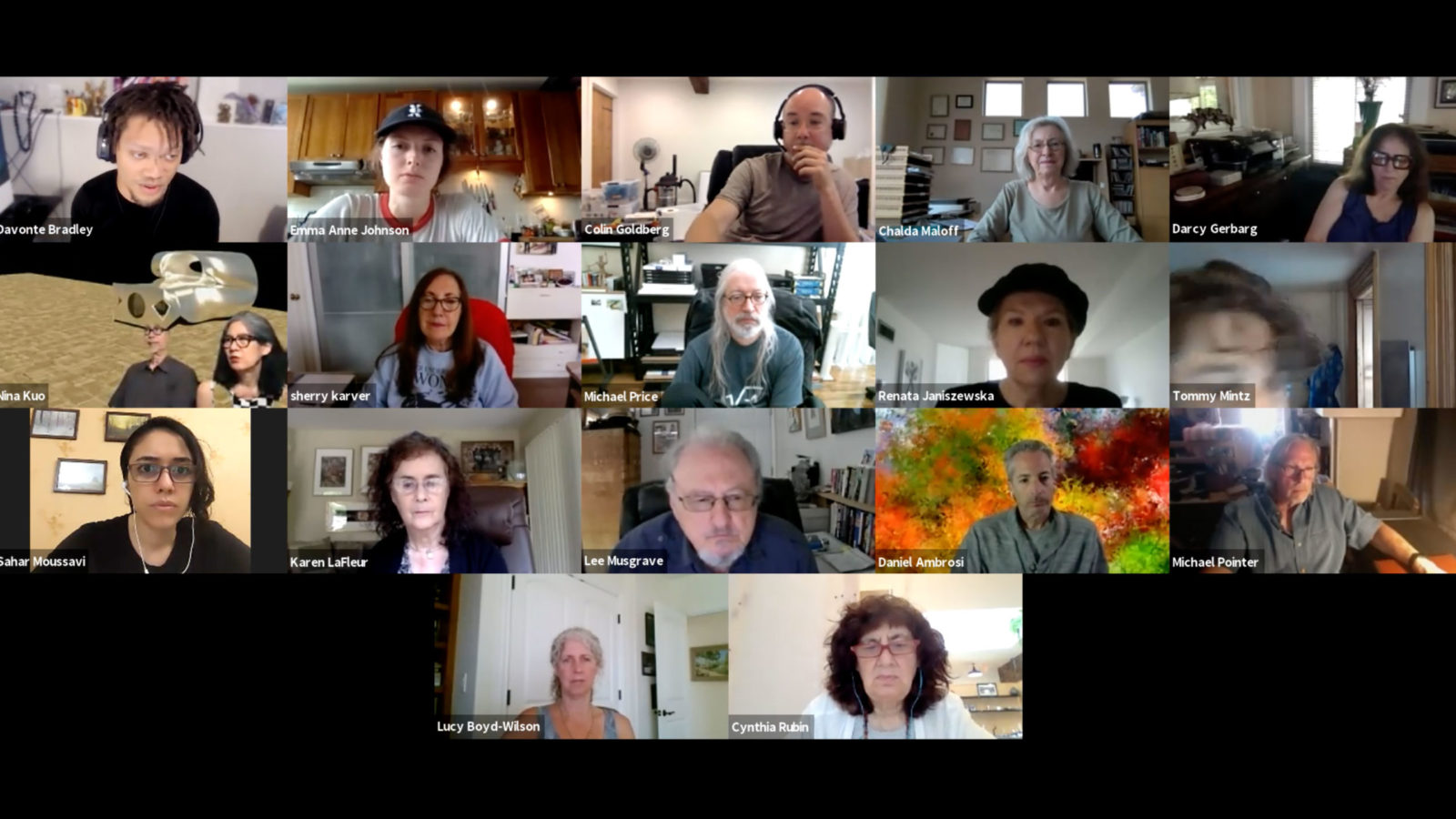
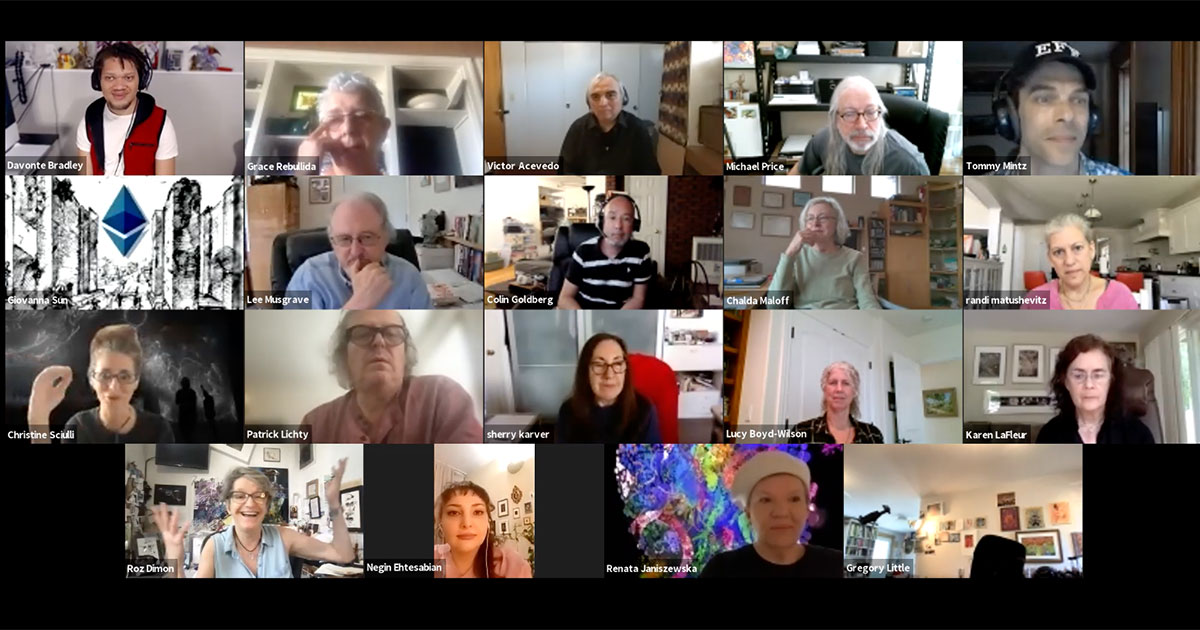
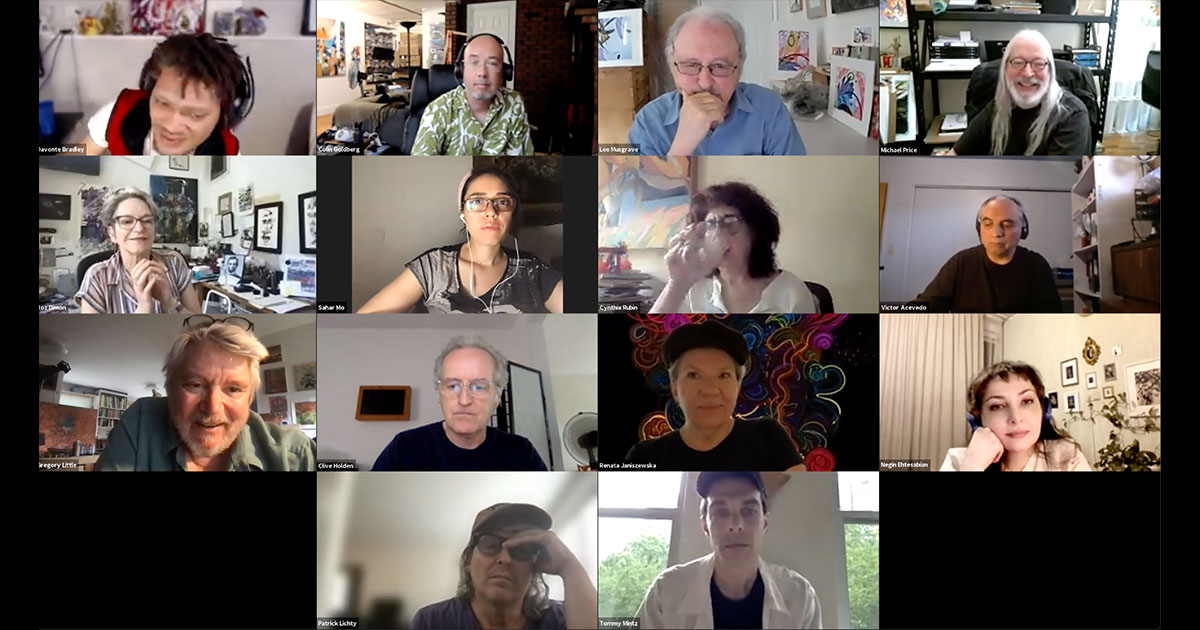
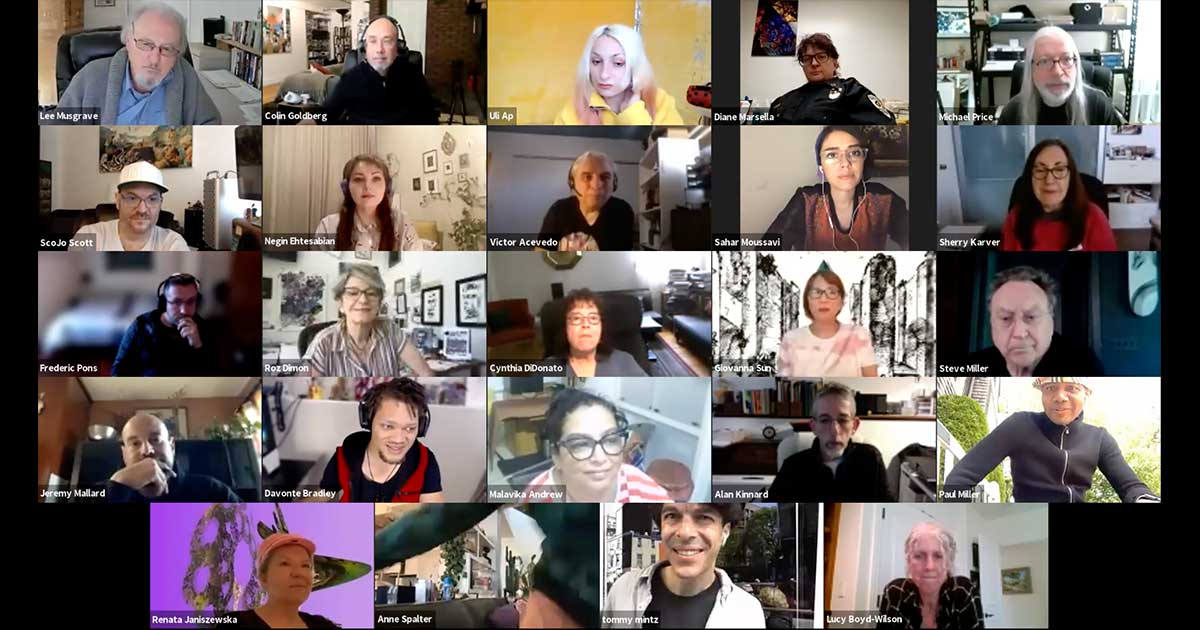
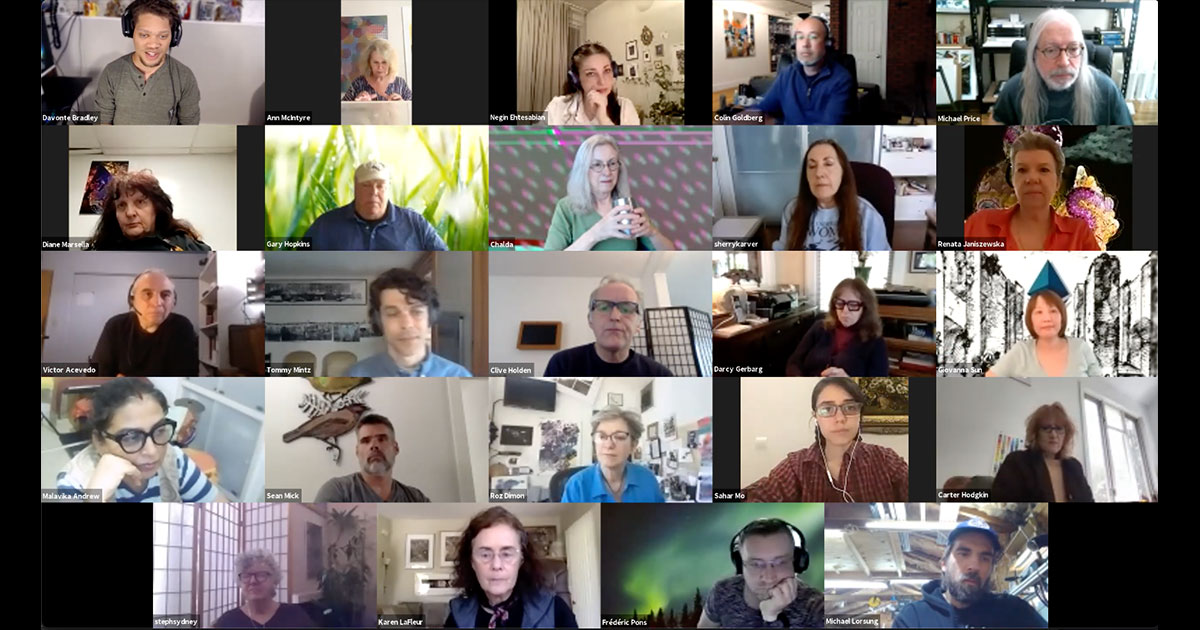
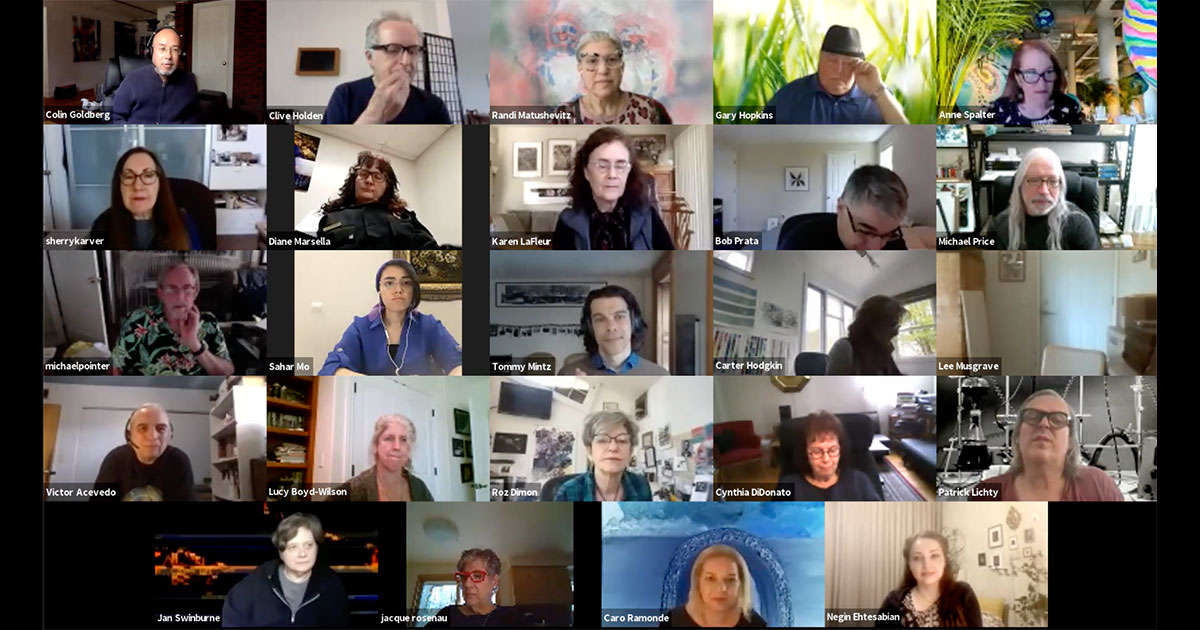
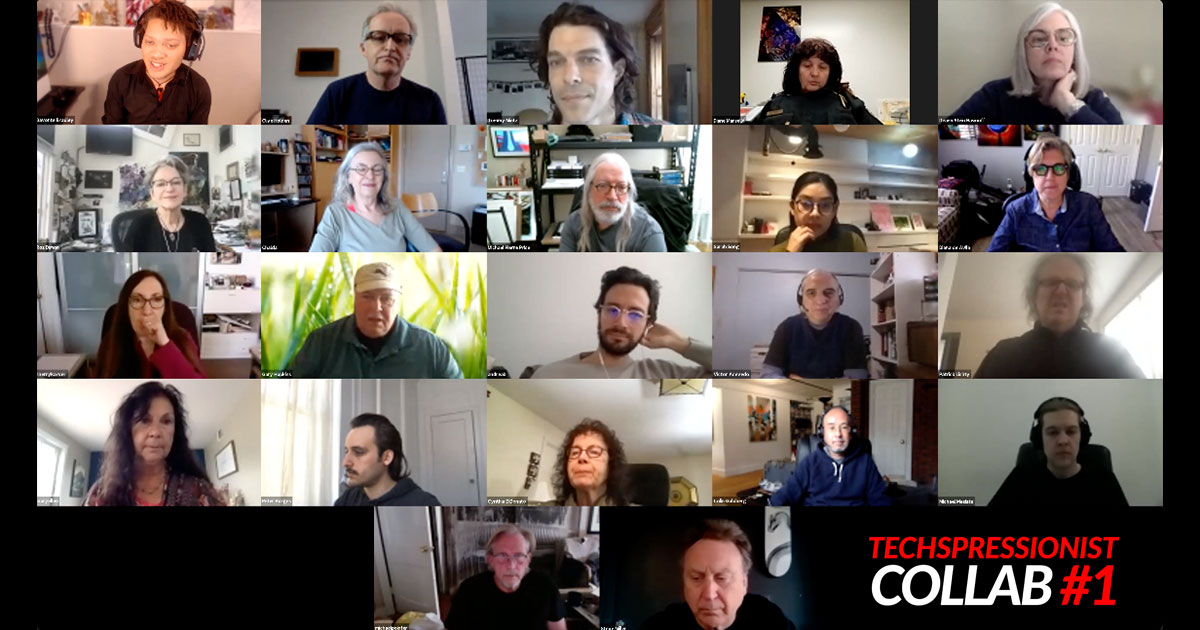
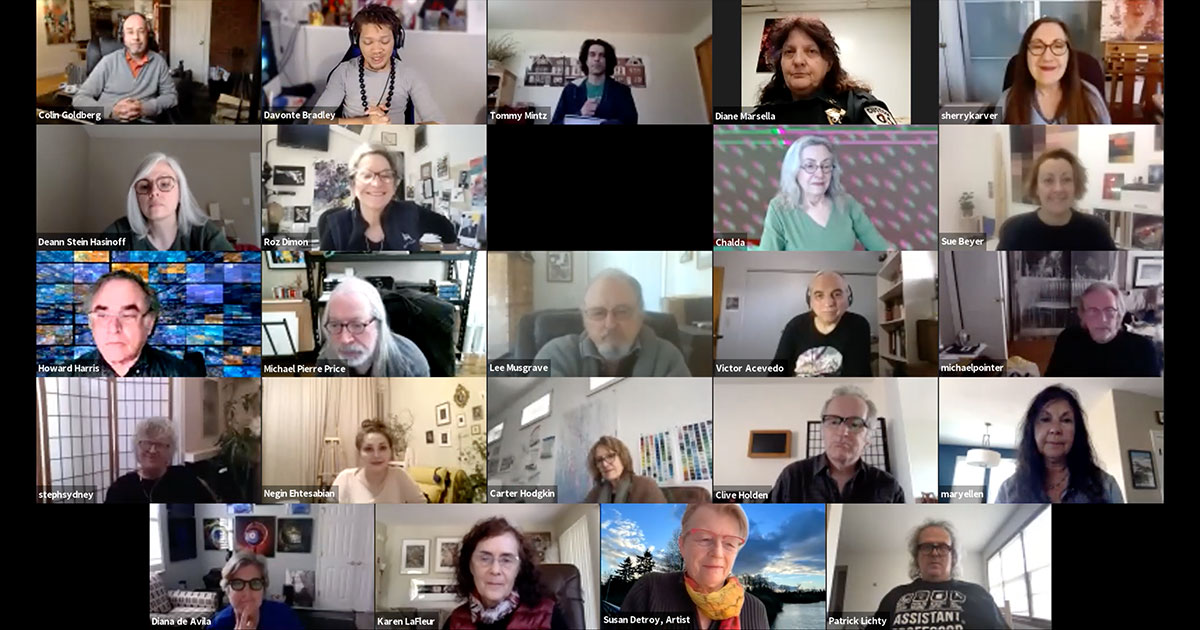
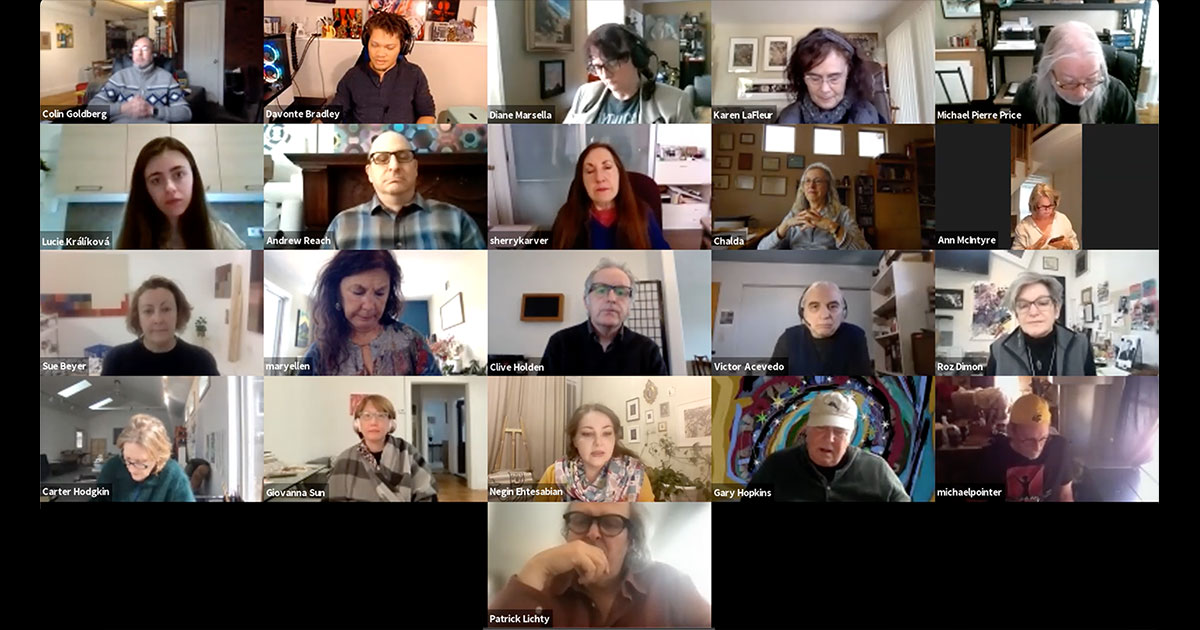
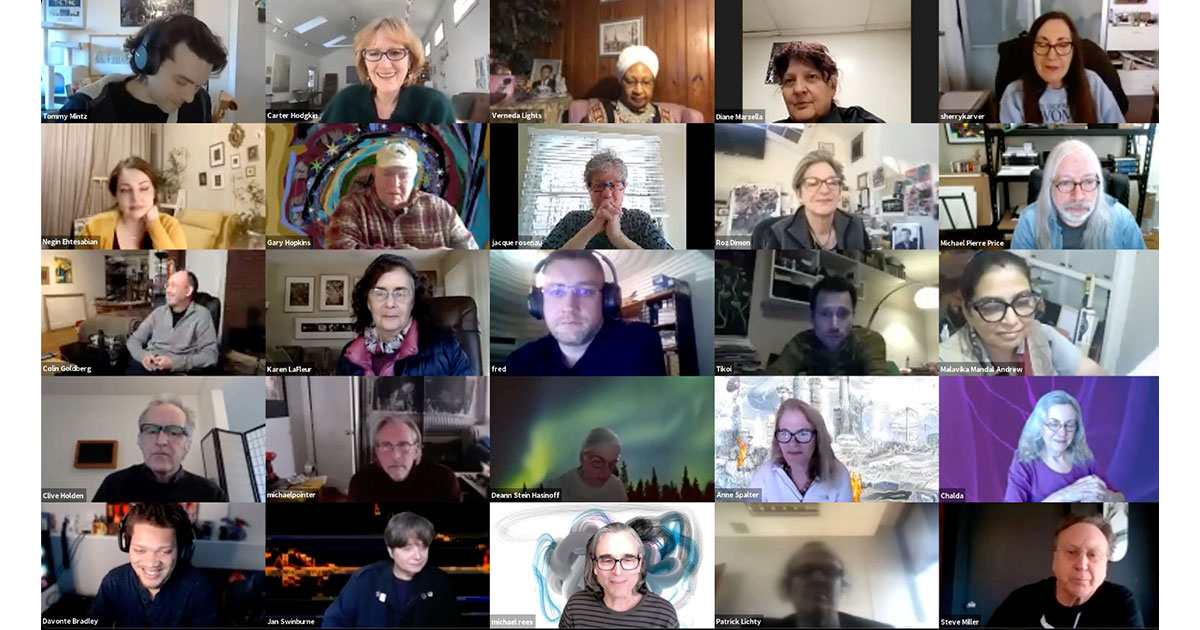
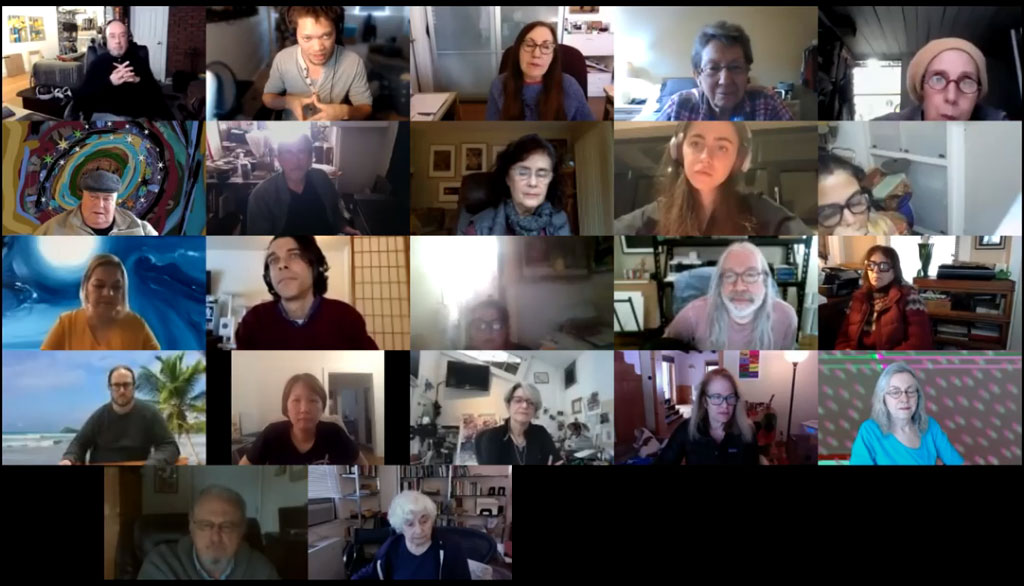
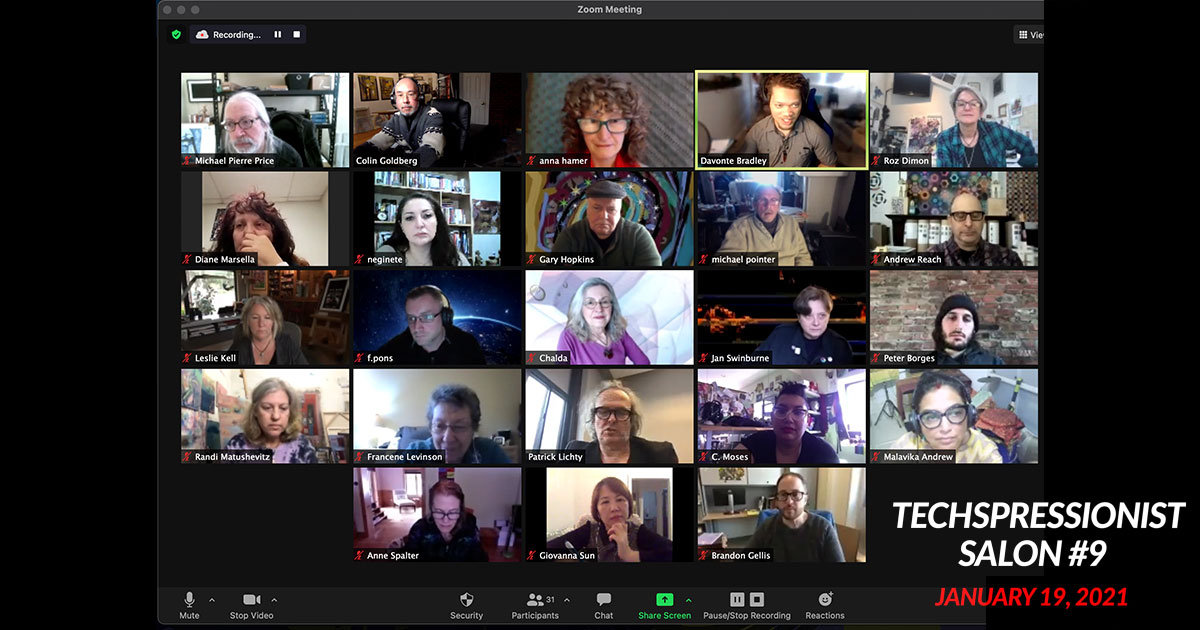
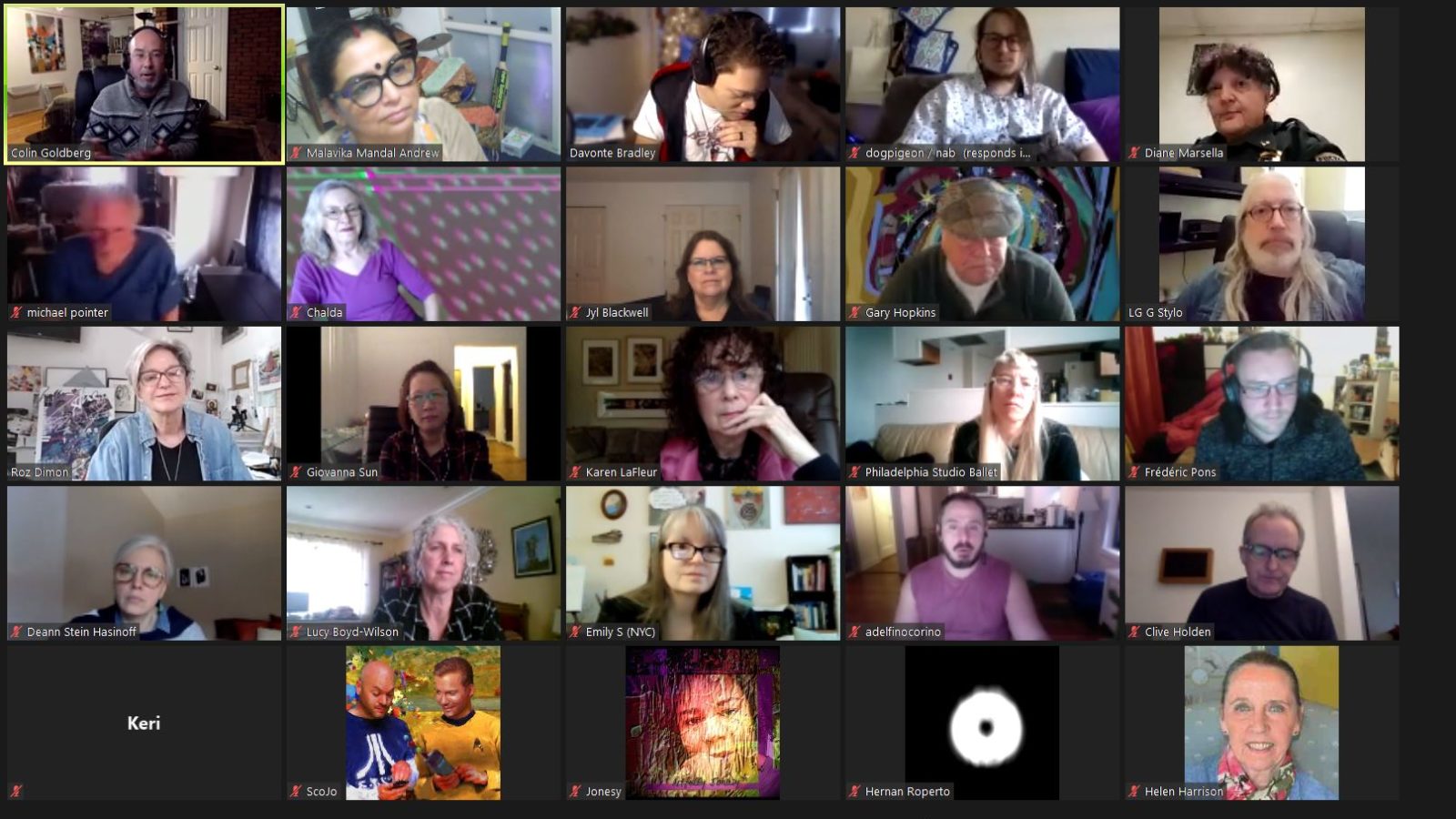
Techspressionist Salons are a time and place in cyberspace where artists gather once a month to hang out, share their work and discuss matters relating to art, philosophy, and technology.
These meetups were conceived as a modern counterpart to the Surrealist salons of the 1920’s, in which artists could meet informally to socialize and discuss ideas. Techspressionism is a 100% volunteer-based international artist community.
The First Techspressionist Salon was held on September 1, 2020, and included artists Colin Goldberg, Patrick Lichty, Steve Miller and Oz Van Rosen, as well as art historian Helen Harrison.
In 1990, after serving as curator of the Parrish Art Museum in Southampton, NY, director of the Public Art Preservation Committee in Manhattan, and curator of Guild Hall Museum in East Hampton, Ms. Harrison became the director of the Pollock-Krasner House and Study Center, a National Historic Landmark museum and the former home of Abstract Expressionist painters Jackson Pollock and Lee Krasner. She served as Director of this National Historic Landmark museum and research collection in East Hampton from 1990 until retiring from her post in 2024. Ms. Harrison continues to serve Techspressionist artistic community in an advisory role.
During this first Salon session, the working definition of Techspressionism was decided upon by the participants as: “An artistic approach in which technology is utilized as a means to express emotional experience.”
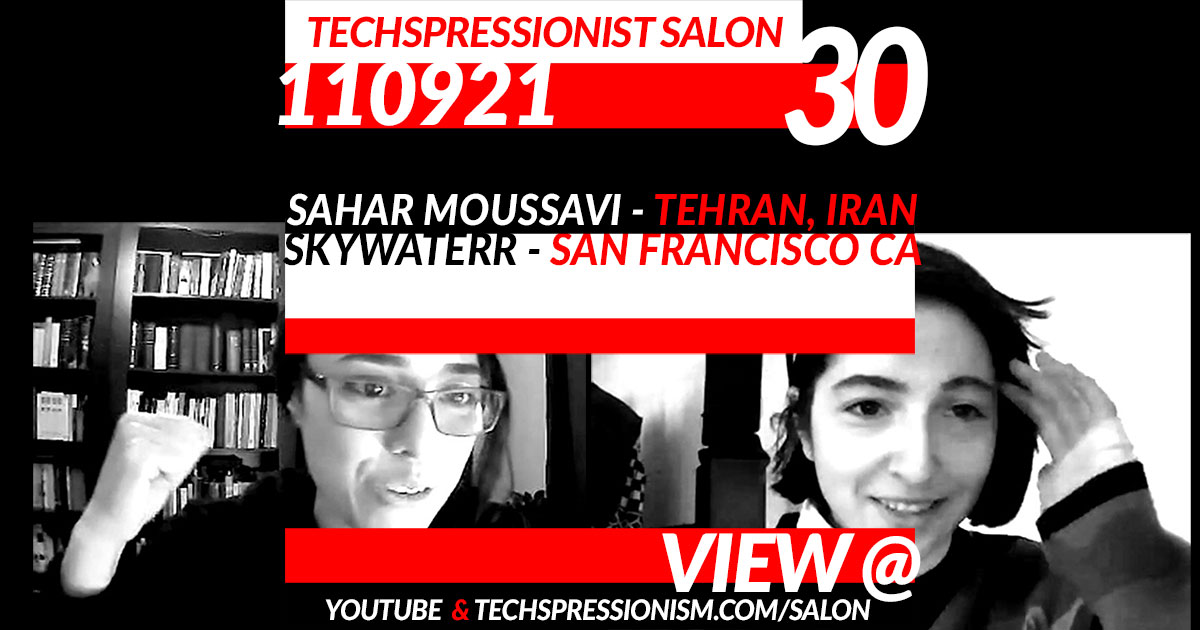
Artist Davonte Bradley (aka DAVO) proposed the idea of recording the Salons and publishing them on the Techspressionism YouTube Channel, which was implemented starting with Salon #8.
Salons are moderated by a rotating panel of artist volunteers. After the recording ends, artists are welcome to hang out for the afterparty (aka advisory board meeting), in which the topic for the next Salon is decided upon, and other community-related ideas are discussed.

 English
 Arabic
 Chinese (Simplified)
 Dutch
Dutch French
 German
 Greek
Greek Hebrew
 Hindi
Hindi Indonesian
 Italian
 Japanese
 Korean
 Persian
 Polish
 Portuguese
 Russian
 Spanish
 Swedish
 Thai
Thai Turkish
 Ukrainian
 Vietnamese