
THE TECHSPRESSIONIST JOURNALISSUE 001
AI Slop in Art
An Excuse Not to Look?
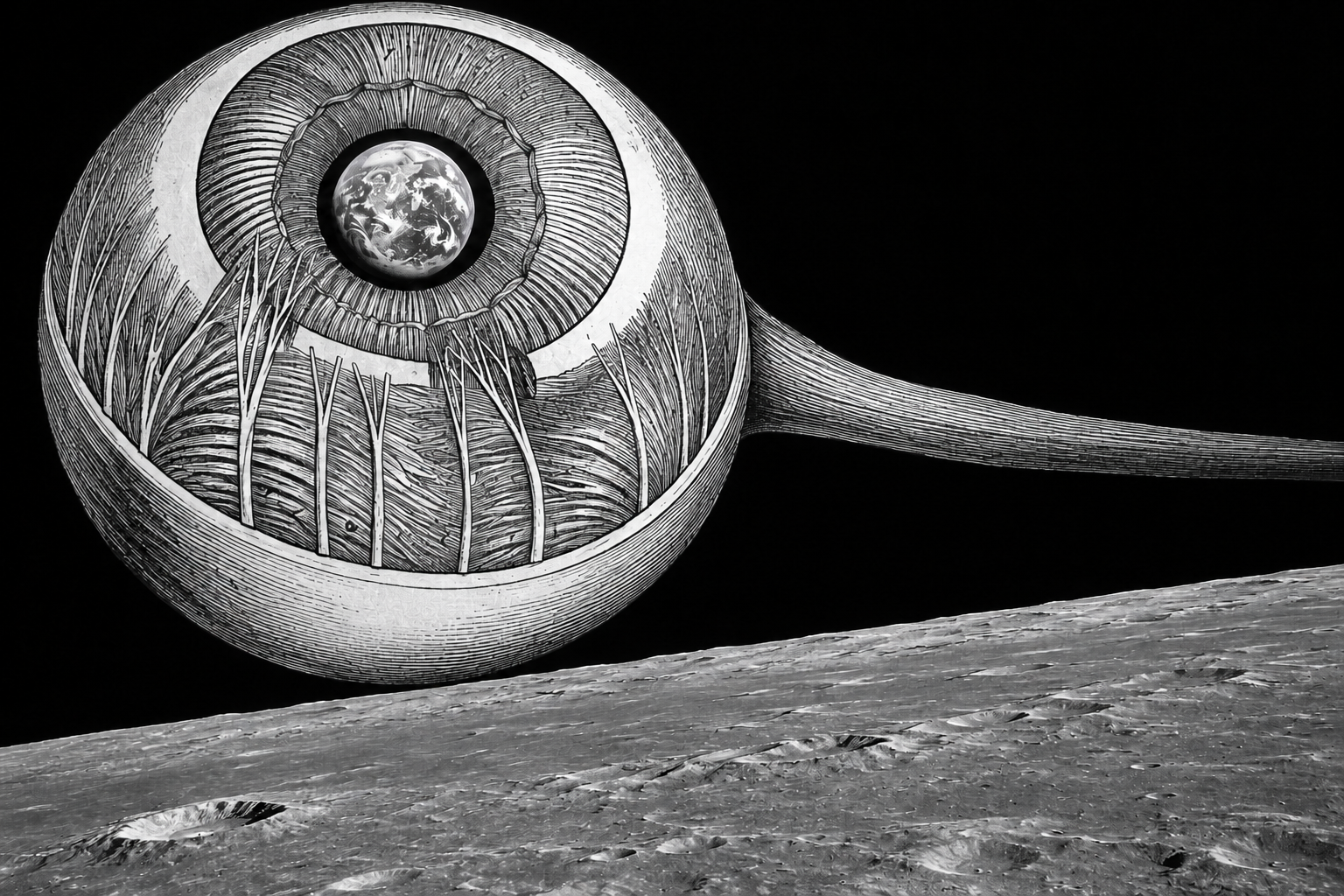
AI Slop with Jellyfish · Colin Goldberg, 2026. Public-domain montage after Piranesi (Cleveland Museum of Art, CC0) and NASA’s Apollo 11 Earthrise; alterations using OpenAI image editing; animation using Runway, silent grayscale delivery. Full sources and alterations.
What is AI slop in art?
Merriam-Webster’s word of the year for 2025 was “slop.” The word had spread through 2024 as “AI slop,” a name for pictures, videos and writing made with artificial intelligence (AI) that feel careless or empty, usually churned out in bulk to farm clicks or fool people. A January 2026 article by researcher Cody Kommers and colleagues gives three tells: it looks fine at a glance, it took almost no effort, and the supply is endless. In art, “AI slop” often lands as a verdict before anyone has really looked.
If that sounds abstract, spend nine seconds with “Is This AI?”, a cartoon the indie animation account Jocular Ocular posted to Instagram in July 2026. The joke works because the doubt now cuts both ways. A real photograph or a hand-drawn line can draw the same suspicion as anything made with AI. Yet nothing is truly computer-generated: a person always writes the code, so the work is computer-assisted, at least for now. The suspicion may also have a use. Anyone asking how something was made is still looking.
The insult is new, but the reflex is old. When photography arrived in the 1800s, the French poet Charles Baudelaire refused to call it art. In a January 27, 2021 Techspressionism interview, one of the earliest recordings the artist group published, artist Anne Spalter, who went on to found the original digital fine arts courses at Brown University and the Rhode Island School of Design (RISD) in the 1990s, remembers visiting critics from New York who refused to even look at her work as a RISD graduate student because she used a computer (watch at 19:04). She is screen-sharing her AI work as she says it. Spalter was working with AI years before ChatGPT arrived in late 2022: in the 2022 group show Techspressionism: Digital and Beyond at Southampton Arts Center, she exhibited pastel drawings based on compositions she created with AI in 2019. Every artist’s tool, from the brush to the camera, was new technology once, and generative AI is simply the latest to come under that kind of scrutiny. The question here is a narrow one: when someone says “slop,” are they describing the work in front of them, or excusing themselves from looking at it?
This Journal is an experiment of its own, a piece of experimental media art about what people can make with AI. ChatGPT was used for research and drafts; Claude was used for editing, fact-checking and revision; OpenAI’s image tools were used for the illustrations; and Runway was used to animate the cover. That tells you how it was made, not whether it’s any good. The lens here is Techspressionism, an artistic approach in which technology is utilized as a means to express emotional experience. The work still has to earn your attention.
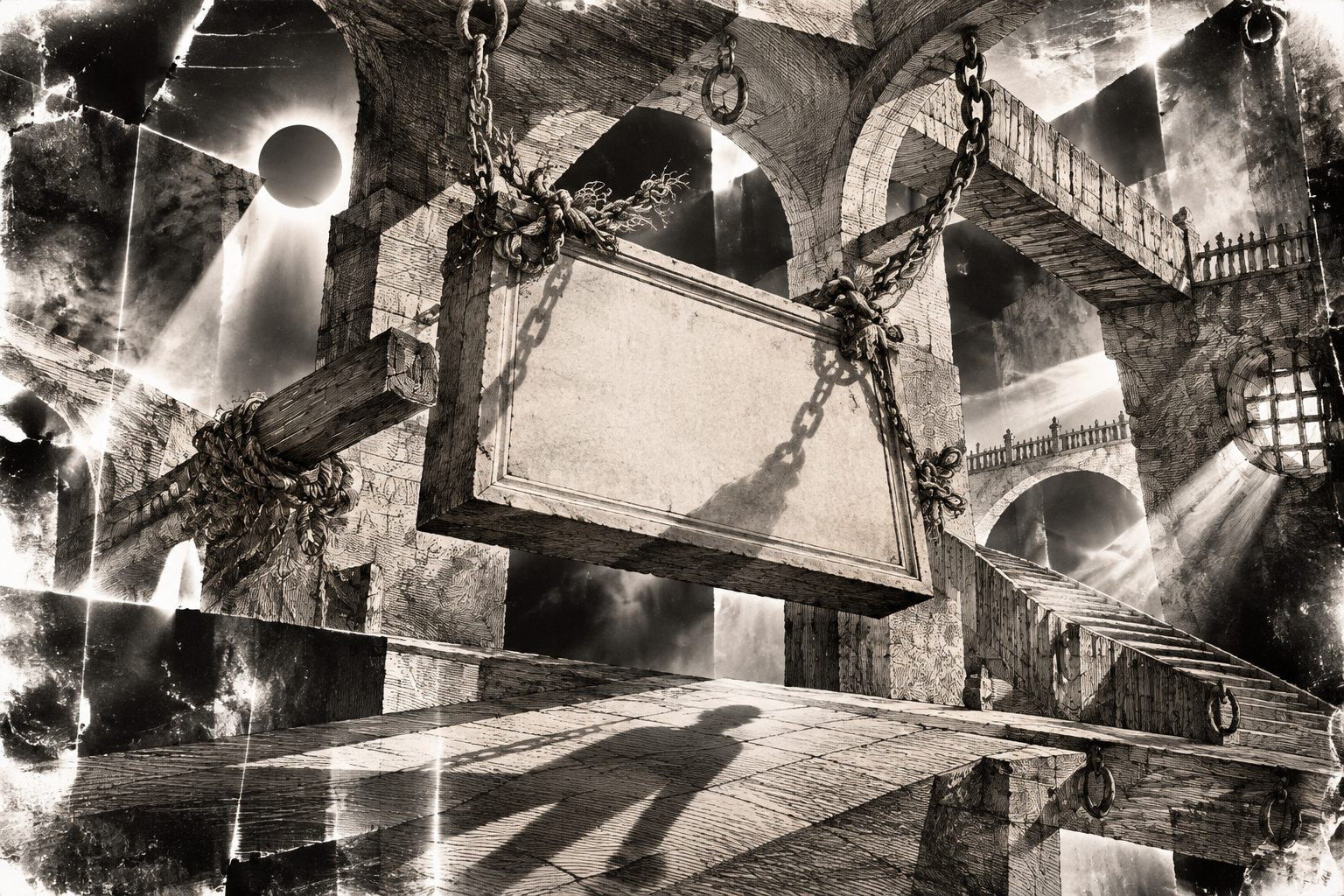
Participation needs a purpose
Digital artist Mike Winkelmann, better known as Beeple, whose NFT Everydays: The First 5000 Days sold at Christie’s for $69.3 million in 2021, built Diffuse Control for the Madison Museum of Contemporary Art in Wisconsin, where it runs from September 19, 2026 to January 10, 2027. Visitors use AI to change the images on its twelve screens. Wisconsin Public Radio reported on September 25, 2026 that more than 900 people had signed an open letter against it, objecting to which artworks feed the system and how its AI was built. Some signers called it “AI slop,” according to the Cap Times.
The appeal is easy to see. Type a few words, called a prompt, and the picture changes. The museum says its images are out of copyright or used with permission and aren’t used to train the AI further. That covers the museum’s pictures, not the images used to build the AI in the first place, or whether the result is any good.
“Slop” often assumes no person stands behind the work. A label can even do the judging on its own: in a 2023 study by Lucas Bellaiche and colleagues, people rated the same paintings made with AI higher when told a human had made them. Artist Verneda Lights argues that AI changes what the artist’s hand means. “Before software, our tools were inanimate,” (watch at 1:00:47) she says in a February 3, 2023 Techspressionism interview. “We control it with our hand. It moves at our will. It goes where we want it to go. AI is not like that.” Because AI “has a mind of its own,” she says, artists now have to decide how they will work with it. Her own portraits, built by digitally layering photographs, draw on Afrofuturism and Afro-surrealism, traditions that use imagined futures and dreamlike imagery to explore Black experience, to reflect on time and grief. Lights is also a poet and a retired physician from South Carolina’s Gullah Geechee community, and she presented at Yale’s Ultra Space Symposium in 2023.
In a recorded October 3, 2022 conversation hosted by Techspressionism, Christiane Paul, curator of digital art at the Whitney Museum of American Art, distinguishes between technology used as a tool and technology used as a medium (watch at 26:39). The conversation, with art historian Helen A. Harrison, longtime director of the Pollock-Krasner House and Study Center, looked back on Techspressionism: Digital and Beyond, a 2022 group show of more than 90 artists at Southampton Arts Center. Paul’s distinction answers Harrison’s question: how much of an artist’s own subjectivity reaches the finished work when technology is involved? (watch at 23:20) By Paul’s measure, the question about Beeple’s installation is whether its AI is a tool for changing pictures or the medium the work is about. What matters is whether changing the image changes the feeling of the work for the viewer.
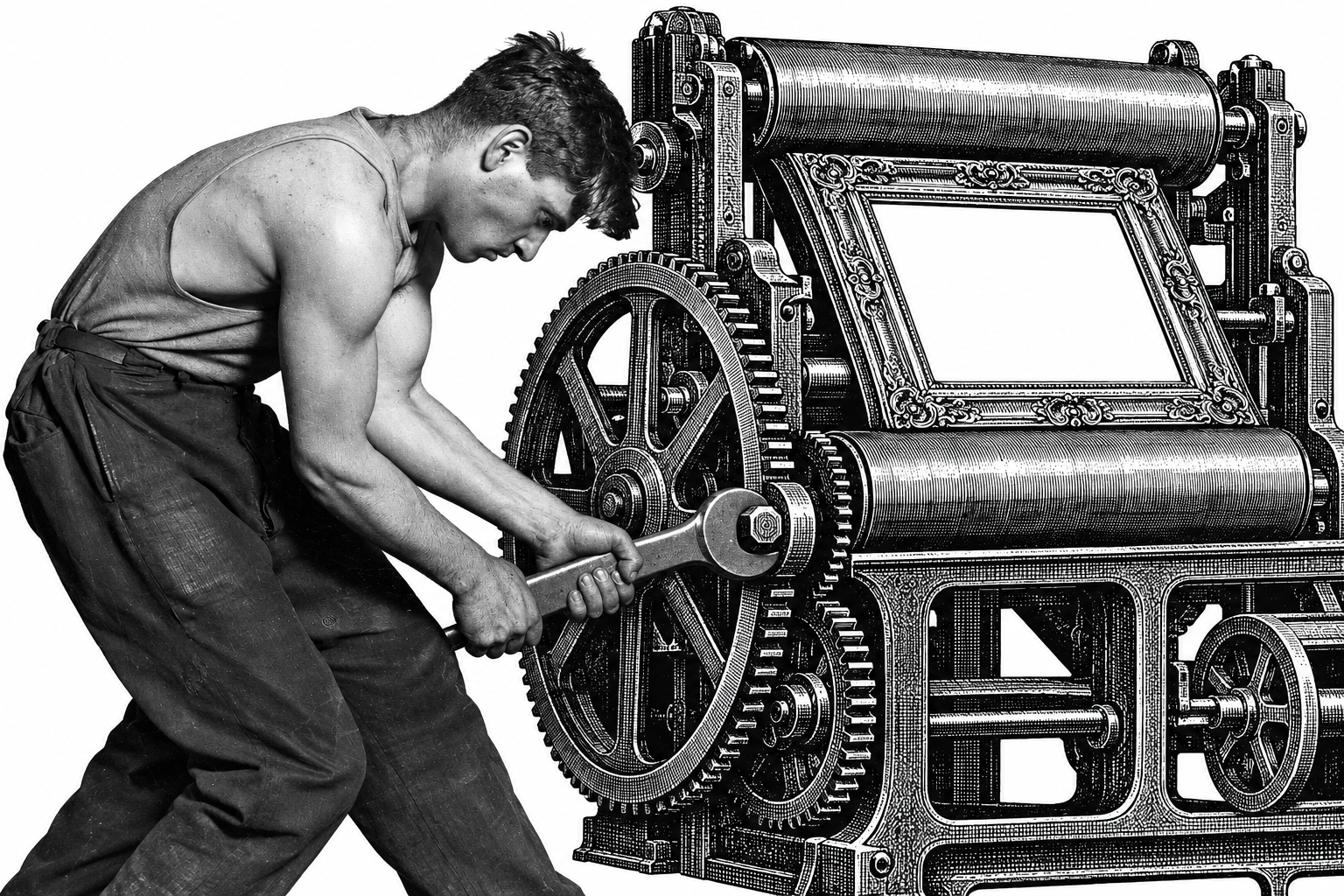
After the wow
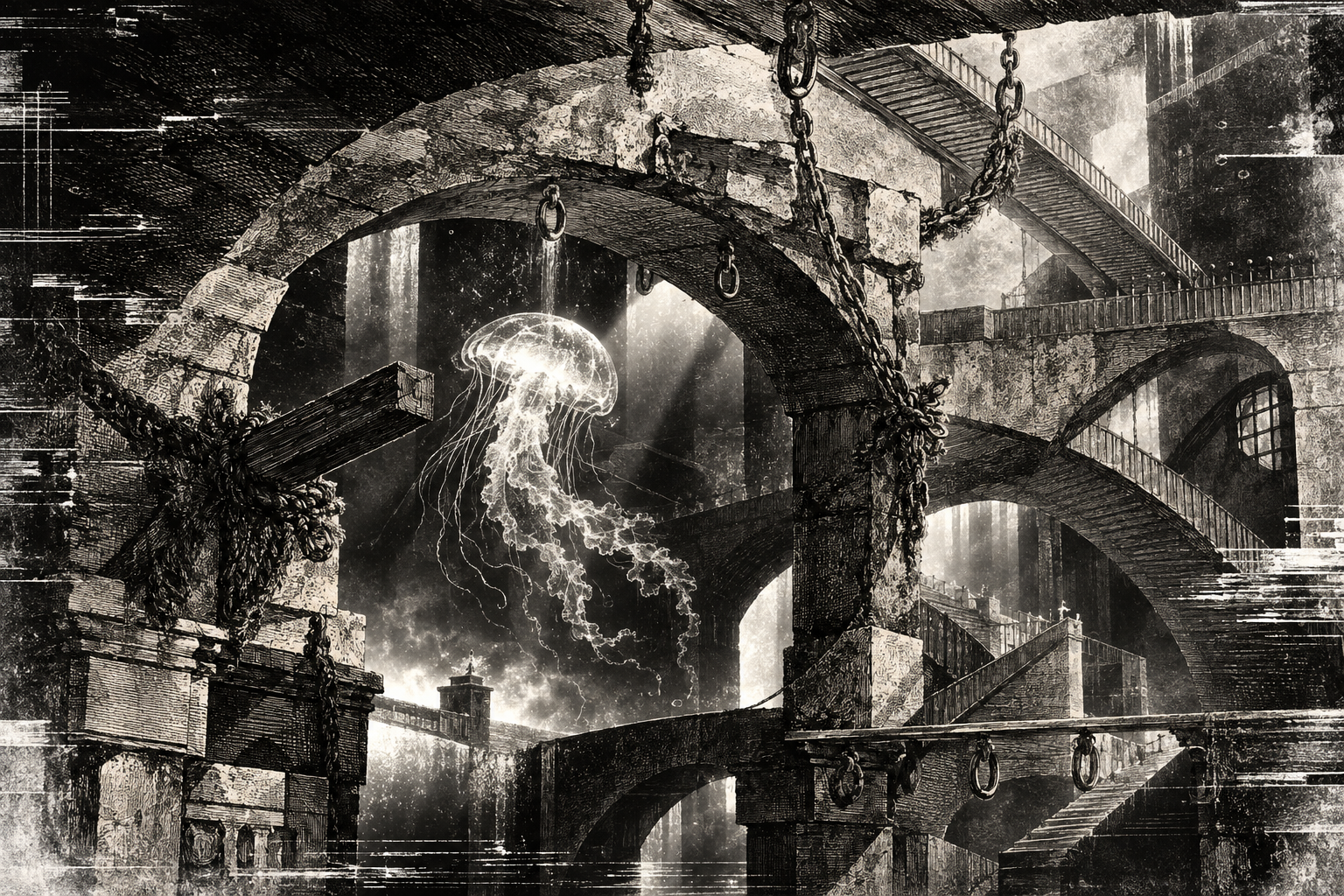
Turkish American artist Refik Anadol, profiled on CBS Sunday Morning in October 2025, fills a room with moving images, sound and scent in Machine Dreams: Rainforest at Dataland, a Los Angeles museum of AI art, on view through January 31, 2027. It is undeniably impressive. Whether that feeling lasts past the entrance is another matter.
Dataland says the nature data behind the work was gathered with permission. Permission is a recurring concern for artist Patrick Lichty, a co-founder of the Techspressionism artist group who teaches digital media at Winona State University. In a December 21, 2022 Techspressionism Salon, a recorded online discussion among artists, he questions how tech platforms treat the artists who use them (watch at 11:45). Asking where the material came from is part of looking.
Sasha Stiles, an American artist and poet whose AI work reached the Museum of Modern Art with A Living Poem (2025–26), describes shaping an AI writing tool with her own poems (watch at 32:18) in a May 6, 2025 interview. Artist Carla Gannis, an industry professor at NYU’s Tandon School of Engineering who is working with the Whitney Museum of American Art this semester, is known for remaking old masterpieces digitally, including an emoji version of Bosch’s The Garden of Earthly Delights. In a September 21, 2026 interview she describes prototyping a marble sculpture with AI tools (watch at 43:16), which a robot then milled at the Digital Stone Project in Italy before she spent a month finishing it by hand. For both artists, the first draft is where the work starts.
Choosing, rejecting and revising is a habit worth borrowing. “AI slop” is useful criticism when you can point to what feels generic or empty. Aimed at every use of AI, it skips the close look it ought to prompt.
Whose feelings count?
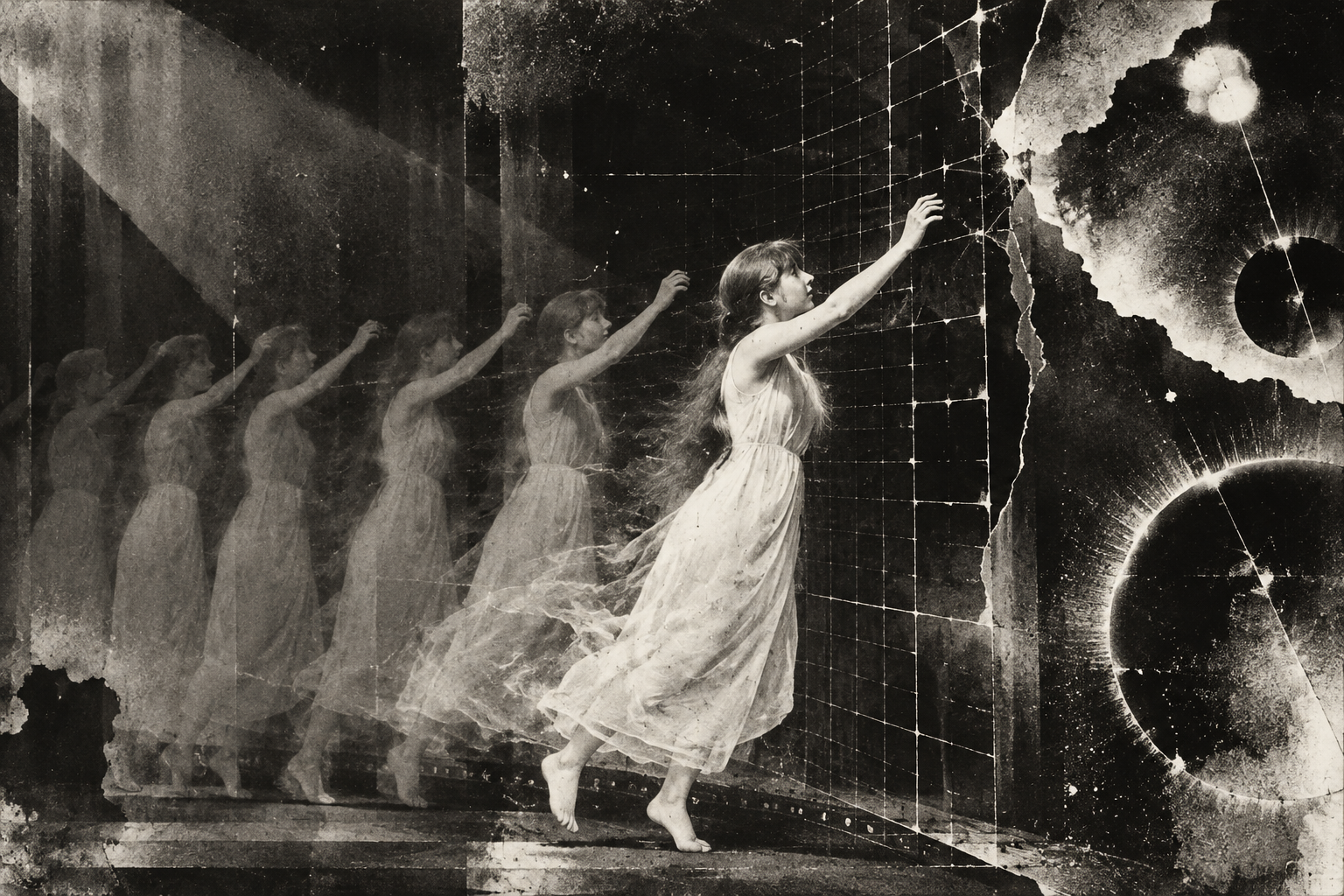
Some people use AI images to do real harm. Italian artist Paolo Cirio, best known for Capture (2020), which used facial recognition to put the faces of about 4,000 French police officers online and was pulled from a French exhibition after the country’s interior minister objected, takes this on in NUDIFY AI, an online artwork for the Jeu de Paume, a Paris art center, on view October 9, 2026 to April 1, 2027. It investigates sexual images of real people made with AI without their consent. Calling that abuse “slop” turns a harm into a matter of taste.
Playing with your own face is different from making pictures of someone else’s. WIRED’s reporting on sexual deepfakes, fake pictures or videos of real people, makes the stakes clear. One word can’t cover both an artist’s consensual experiment and that kind of abuse.
The Jeu de Paume scheduled a talk with Cirio for October 23, 2026. If technology is a way to express feeling, the people in the pictures have feelings that count as well.
From a prompt to a point of view
Artist, physicist and mathematician Michael Pierre Price makes prints using algorithms, step-by-step computer instructions. In the December 21, 2022 Salon he asks for plain explanations of how AI image tools work (watch at 22:30). His request suits any viewer: knowing how a tool works, and what you’re taking on trust, is part of looking closely.
AI slop in art is real. Work can be empty, generic or harmful, and saying so is fair criticism. The label fails only when it replaces looking. The artists in these recordings model a better habit: find out what was chosen and where the material came from before deciding how you feel about it. So what have people made with all this machinery that’s worth your time?
Artists in this issue: Anne Spalter · Verneda Lights · Patrick Lichty · Sasha Stiles · Carla Gannis · Michael Pierre Price
Credits and AI disclosure
Text, images and generative video by Colin Goldberg, contributing author and artist. AI tools were used in the research and writing: ChatGPT for research and drafting; Claude for editing, fact-checking and revision; OpenAI image tools to make and recompose the illustrations; and Runway to animate the cover. Colin Goldberg directed the editorial and visual development.
The illustrations combine and transform the public-domain source images credited below. They are artistic interpretations, not photographs or footage of the exhibitions discussed. Reporting and archive passages are linked throughout; original artists, photographers, institutions and applicable licenses appear in Image credits and alterations.
Pass the question along
Who controls the picture—and whose consent counts?
Share on X · Share on LinkedIn · Share by email · Issue permalink
Explore, question, share
We explore today’s ideas, debates and discoveries at the intersection of art and technology. Techspressionism gives us a lens for asking how tools become emotional experiences. Follow the original sources, consider the arguments and share the issue when it gives you something worth discussing.
Cite this TSJ issue
Goldberg, Colin. “AI Slop in Art: An Excuse Not to Look?” The Techspressionist Journal (TSJ), issue 001, October 23, 2026. https://techspressionism.com/journal/ai-slop/. Accessed [date].
For the editorial argument: Techspressionism and expressive intent. For definitions and context: What is Techspressionism? · Techspressionist Manifesto.
Image credits and alterations
Cover and cover animation: AI-altered after Giovanni Battista Piranesi, The Prisons: Title Page — Interior of a Prison (1745), Cleveland Museum of Art, accession 1941.26.1, Dudley P. Allen Fund; CC0 1.0 public-domain dedication. Digital image: Cleveland Museum of Art; photography credited to David Brichford.
The revised cover also incorporates NASA’s Apollo 11 Earthrise AS11-44-6548 (July 20, 1969), US public domain as a NASA-created government work. Using OpenAI image editing, a photographic Earth was inserted into the jellyfish bell and photographic lunar terrain was recomposed beneath the engraved architecture; monochrome conversion and synthetic reconstruction were applied.
The revised cover animation, made with Runway, adds rhythmic jellyfish bell contraction, flowing tentacles and subtle Earth/cloud motion. Final delivery is silent and converted to neutral grayscale. This montage interprets ecological spectacle within institutional architecture; it is not footage of the exhibitions discussed.
Earlier cover animation, preserved in the archive: cover alterations for the Journal include recomposition, synthetic architecture and the luminous jellyfish. OpenAI image editing was used to remove lettering and branding and reconstruct the image beneath. Runway was used to animate it silently, adding jellyfish pulsing and tentacle movement, mist, light and swaying chains. In the final edit, slow opening and closing frames were removed and the transition was blended to keep motion across the loop. These are artistic interpretations, not documentary reproductions.
Interior montage: after Henry Vandyke Carter, Gray’s Anatomy, plate 872, reproduced in the 1918 edition, public domain (Public Domain Mark 1.0); and NASA, Apollo 11 Earthrise AS11-44-6548, July 20, 1969, US public domain as a NASA-created government work. OpenAI image tools were used to remove labels and color, enlarge and reorient the cutaway, insert Earth into the pupil, recompose the lunar terrain and extend the optic nerve. The photographic elements were artistically reconstructed; this is not a documentary reproduction.
“Who turns the machine?”: photographic source Lewis Hine, Power house mechanic working on steam pump (1920), National Archives, 69-RH-4L-2, public domain through expired copyright. Illustrated source: Printing Office (1875), from A Descriptive and Illustrated Pamphlet of Novelty Job Printing Presses, engraving signed “Mack del.”; public domain in the United States through expired copyright. OpenAI image tools were used to isolate and enlarge the mechanic, reconstruct the wrench and printing machinery, remove other figures and the background, and insert an empty ornate frame between the rollers. Monochrome photomontage with synthetic reconstruction; not documentary imagery of the exhibitions discussed.
“A frame is not an argument” and “Nature, under construction”: after Giovanni Battista Piranesi, The Prisons: Title Page — Interior of a Prison (1745), Cleveland Museum of Art, accession 1941.26.1, Dudley P. Allen Fund; CC0 1.0. OpenAI image tools were used to recompose the architecture, add synthetic suspended frames or a luminous jellyfish, and apply monochrome photogram-like interference. These images make editorial metaphors; they do not depict Beeple’s installation or Dataland.
“A likeness, multiplied”: after Eadweard Muybridge, Draped woman reaching up, stooping and turning around, photographed 1884–1886, published in Animal Locomotion (1887), plate 463; USC Libraries Special Collections. Public domain in the United States through expired copyright; Muybridge died in 1904. OpenAI image tools were used to repeat and recompose the clothed figure with double exposure, synthetic terrain and photogram-like effects. This is an analogy about copied identity, not a depiction of a victim or sexual abuse.
Subscribe to the Journal
One issue. One article. Get new issues by email.
When I use AI to make digital artwork, it is AI assisted. An AI-assisted artwork is one in which AI functions as one tool within a broader artistic process directed by a human artist. The artist may use AI for ideation, image generation, compositing, editing, variation-making, or problem-solving, but retains substantial control over the conception, selection, development, and final form of the work. The emphasis is on human authorship and artistic judgment. An artist may generate hundreds of AI images, combines elements in Photoshop, photographs additional material, redraws sections, alters composition and color, and develops the final work through multiple revisions. AI contributes to the process, but the artwork emerges through ongoing human decision-making.
This is very different from Generative AI, which refers to systems that can create new content—images, text, music, video, or code—based on patterns learned from large datasets. In visual art, a generative AI model can produce an image from a text prompt, an existing image, or a combination of inputs. The emphasis is on the machine’s capacity to generate content. For example, a user types a prompt into Midjourney or ChatGPT’s image generator and accepts one of the resulting images with little or no further modification. Maybe this is where so much slop originated and continues as AI apps proliferate in a user friendly, “ any one can be an artist “ ethos on social media?
But it could finally come down to discernment. As one example, I see so much “slop” in the vast quantities of non objective painting littering the galleries right now, as a different example. Slop is not relegated only to an AI experience, culturally we experience visual pollution everywhere. Sorting through it to something of meaning with a hint of authenticity, whether the artists hand is evident or not, may require a new way of seeing. Where is John Berger when we need him!? Thank you Colin for the terrific first edition.