
Techspressionism: “Expressionism for the Digital Age.”
In 2020, at the height of the global pandemic, four artists working across continents came together on Zoom to launch Techspressionism. Colin Goldberg, Oz Van Rosen, and Steve Miller were joined by Patrick Lichty, connecting from Abu Dhabi, forming an international dialogue shaped by rapid cultural and technological change. Often described as “Expressionism for the Digital Age,” Techspressionism emerged in response to the global shift into digital life, the rise of mobile tools empowering everyday creativity, and the expanding role of human–machine collaboration in art.
Building on the legacy of Expressionism, Techspressionism extends its trajectory into the 21st century. It rejects the notion that technology distances art from emotion, asserting instead that contemporary tools can intensify gesture, urgency, and psychological presence. Early thinking around Techspressionism was shaped with guidance from art historian Helen A. Harrison, longtime director of the Pollock-Krasner House and Study Center, who continues to serve as an advisor. She emphasized defining Techspressionism as an approach rather than a style, allowing it to remain open across media and aesthetics.
Today, Techspressionism has evolved into a global networked artist community and emerging art movement of more than 350 artists across 45 countries. With over 80,000 Instagram posts using the hashtag #Techspressionism, the term demonstrates growing international resonance and reflects the expressive potential of electronic media as a means of translating inner experience through the tools and technologies of its time.
techspressionism
/tek-spresh-uh-niz-uh m/
- An artistic approach in which technology is utilized as a means to express emotional experience.
- A global networked artist community and emerging art movement exploring technology as a medium of expression.
SALONS
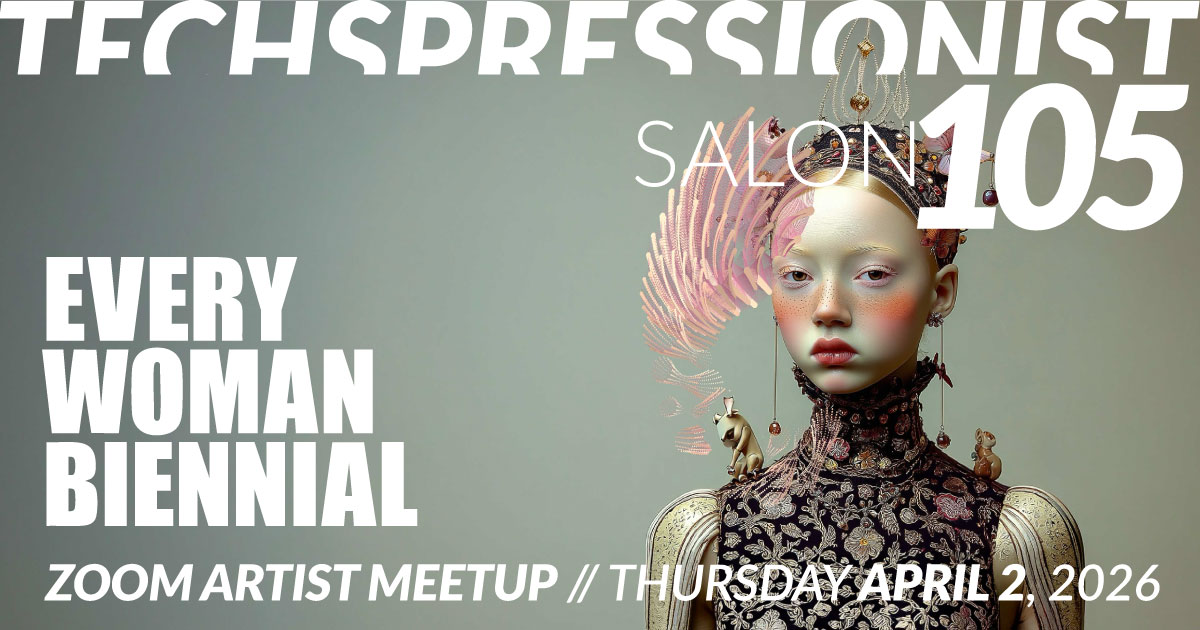
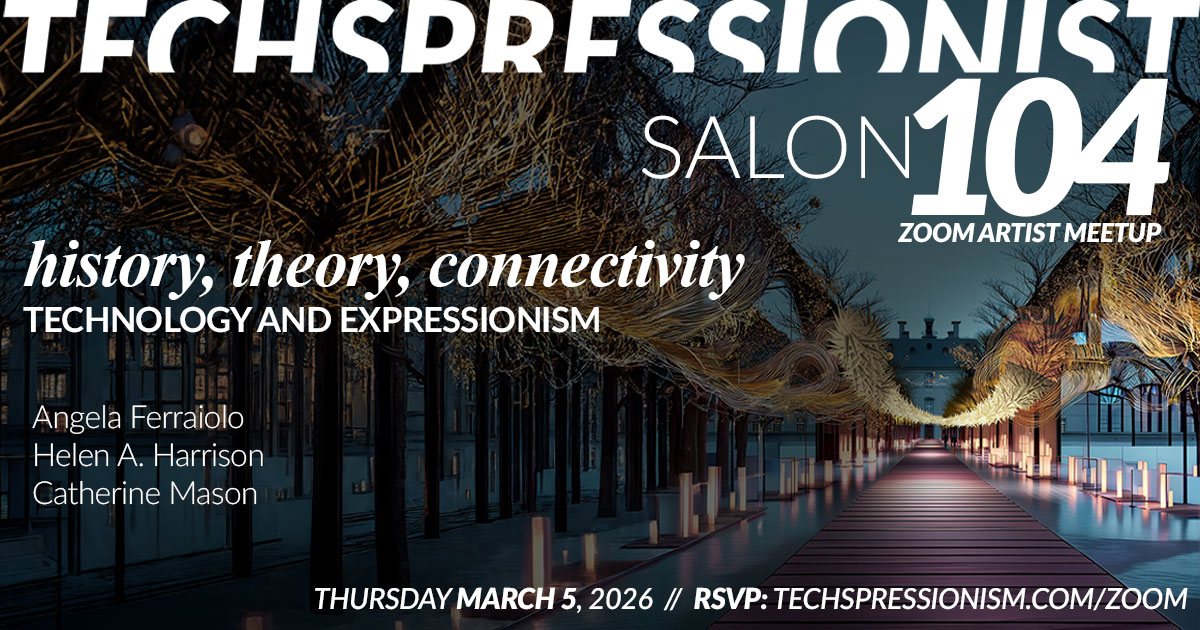
Techspressionist Salons are a time and place in cyberspace where artists gather once a month to hang out, share their work and discuss matters relating to art, philosophy, and technology. These meetups were conceived as a modern counterpart to the Surrealist salons of the 1920’s, in which artists could meet informally to socialize and discuss ideas. Techspressionism is a 100% volunteer-based international artist community.
Techspressionism: Digital and Beyond was the first large-scale physical group exhibition of Techspressionist artworks. The exhibition, which opened at Southampton Arts Center in 2022, included he works of over 90 artists working with technology from more than 20 countries around the world including Afghanistan, Australia, Belgium, Brazil, Canada, Canary Islands, Czech Republic, France, Germany, Hong Kong, India, Iran, Italy, Netherlands, Peru, Puerto Rico, Russia, Taiwan, Turkey, Uganda, Ukraine and the United States. The show went global as part of the 2023 Wrong Biennale.
RECENT INTERVIEWS
Techspressionist Interviews feature artists interviewing artists in the spirit of Warhol’s Interview Magazine.
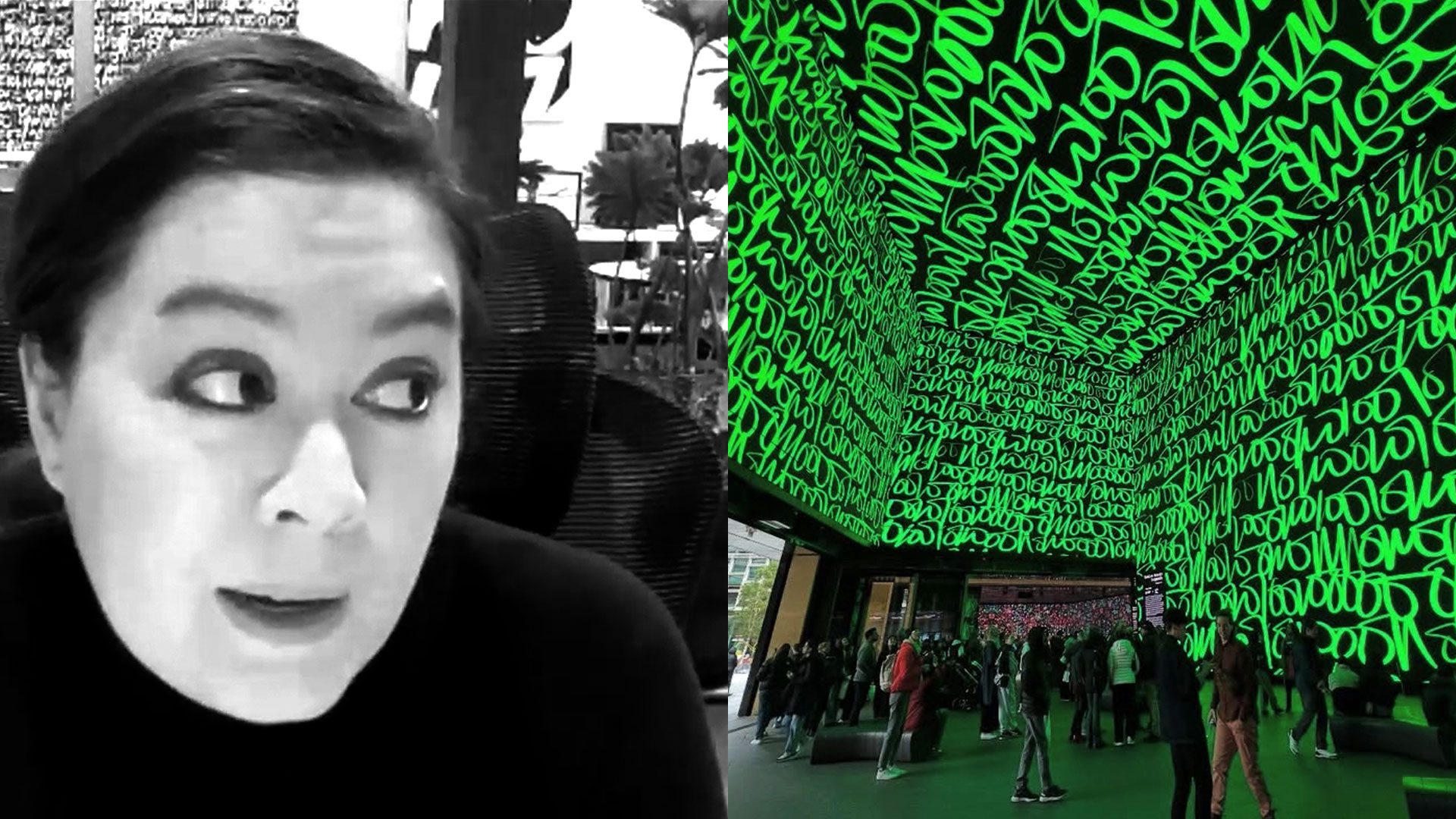
Sasha Stiles
Sasha is a Kalmyk-American poet and language artist whose award-winning work bridges tradition and innovation through hybrid poetics, generative imagination, and collaborative intelligence. Her work “A LIVING POEM” is on display at MoMA thru Spring 2026.
Claudia Hart
Claudia Hart is a pioneering trans-media artist whose work bridges the analog and digital worlds. Trained in art and architectural history at NYU and Columbia, she began exhibiting in the New York art scene before moving into virtual imaging in the early 1990s. Her first retrospective, Pattern and Politics, is on view at the Francisco Carolinum Linz from August 28, 2025, until early 2026.
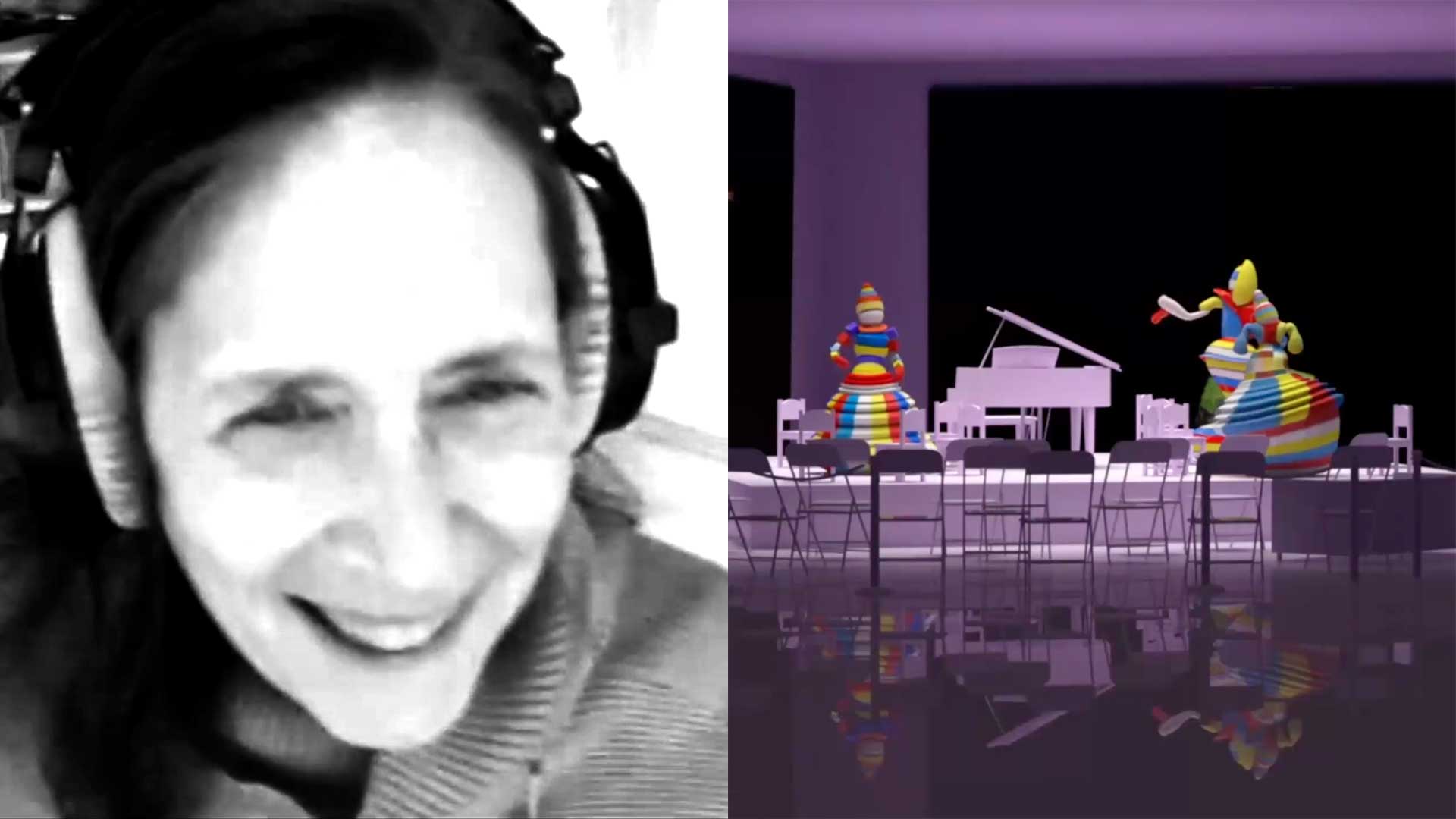
Claudia Hart
Claudia Hart is a pioneering trans-media artist whose work bridges the analog and digital worlds. Trained in art and architectural history at NYU and Columbia, she began exhibiting in the New York art scene before moving into virtual imaging in the early 1990s. Her first retrospective, Pattern and Politics, is on view at the Francisco Carolinum Linz from August 28, 2025, until early 2026.
RECENT EXHIBITION
In September 2025, Techspressionist artists from the US and UK traveled to Urgench, Uzbekistan, to exhibit their work at the Museum of Contemporary Art (CAMUZ), marking the first museum exhibition of Techspressionist works outside of the United States.
“Each age finds its own technique”.
– Jackson Pollock
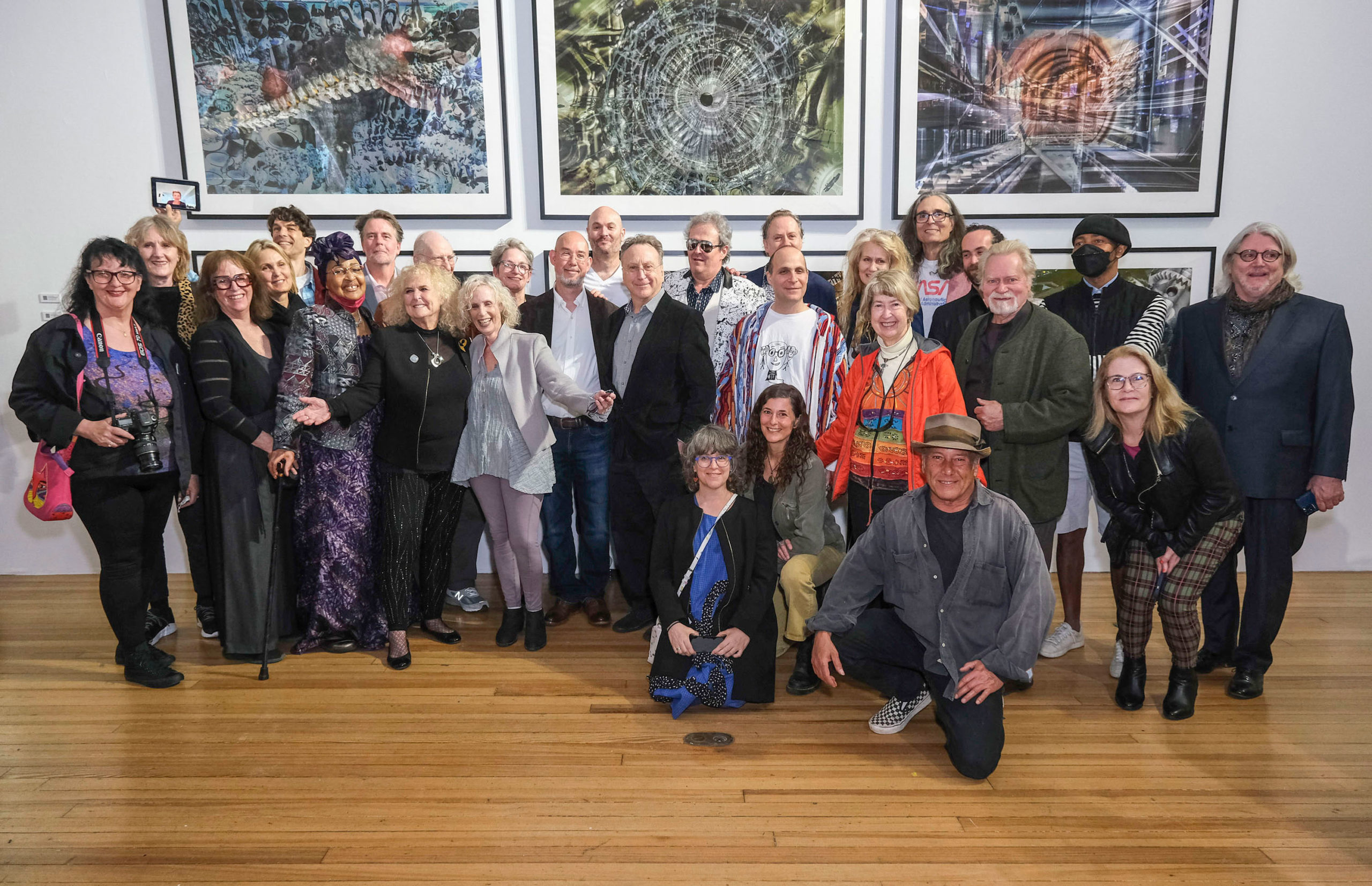
Techspressionism: Digital and Beyond opening reception at Southampton Arts Center, April 23, 2022.
“You’re a Techspressionist when you say you are”.
Techspressionism is different from other art movements because membership is based on self-identification. Anyone is free to call themselves a Techspressionist, use the hashtag on their social media posts, and attend our Salons and co-working sessions. There are no dues or fees for membership. You are a Techspressionist when you say you are.
ROUNDTABLES
Techspressionist Roundtables are small, invitation-only Zoom discussions featuring a moderator and a select group of artists and curators from the community. Each session centers on a specific Techspressionist theme and emphasizes genuine dialogue over formal presentations, fostering candid, creative exchange.
VIRTUAL CO-WORKING
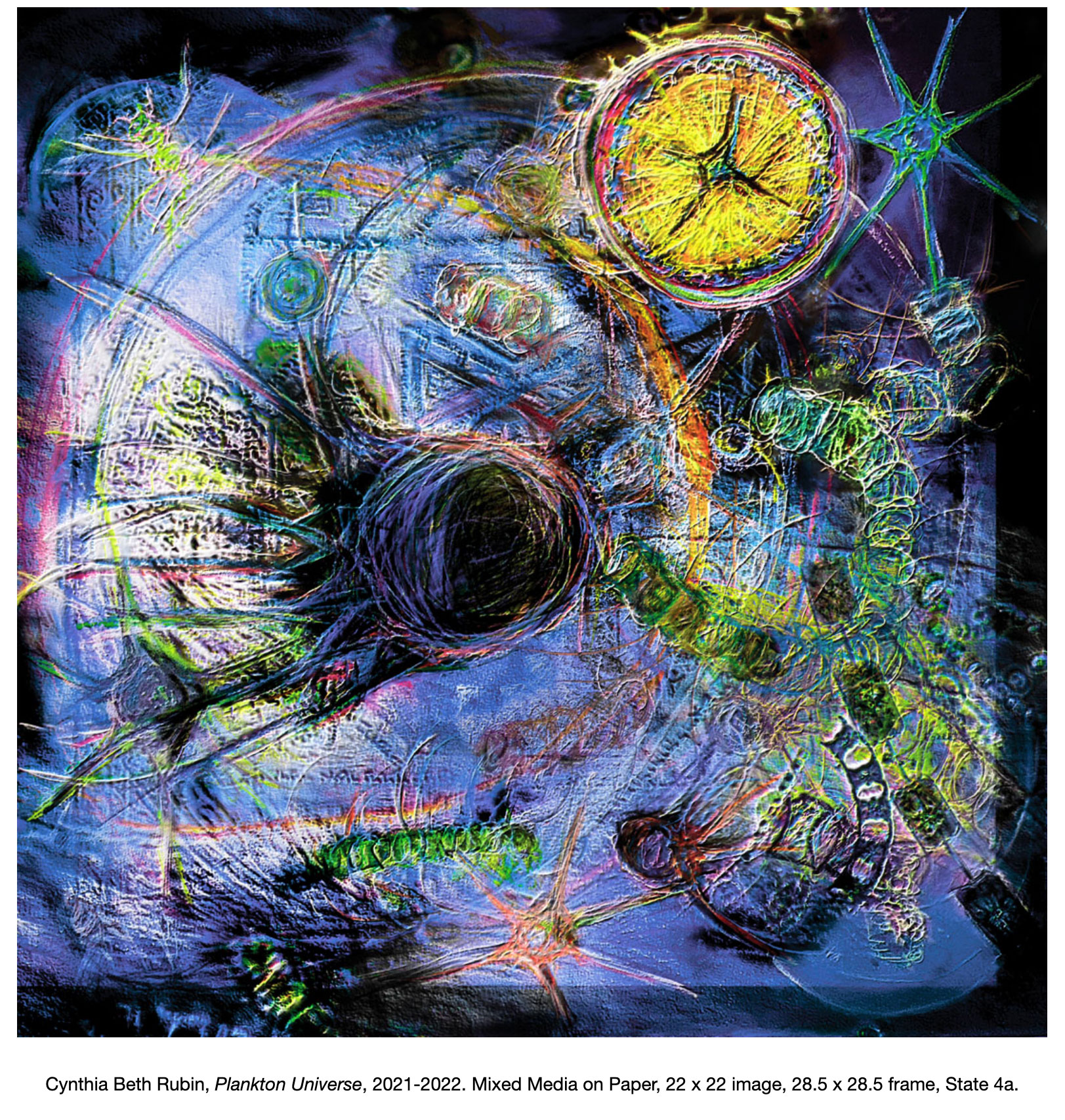
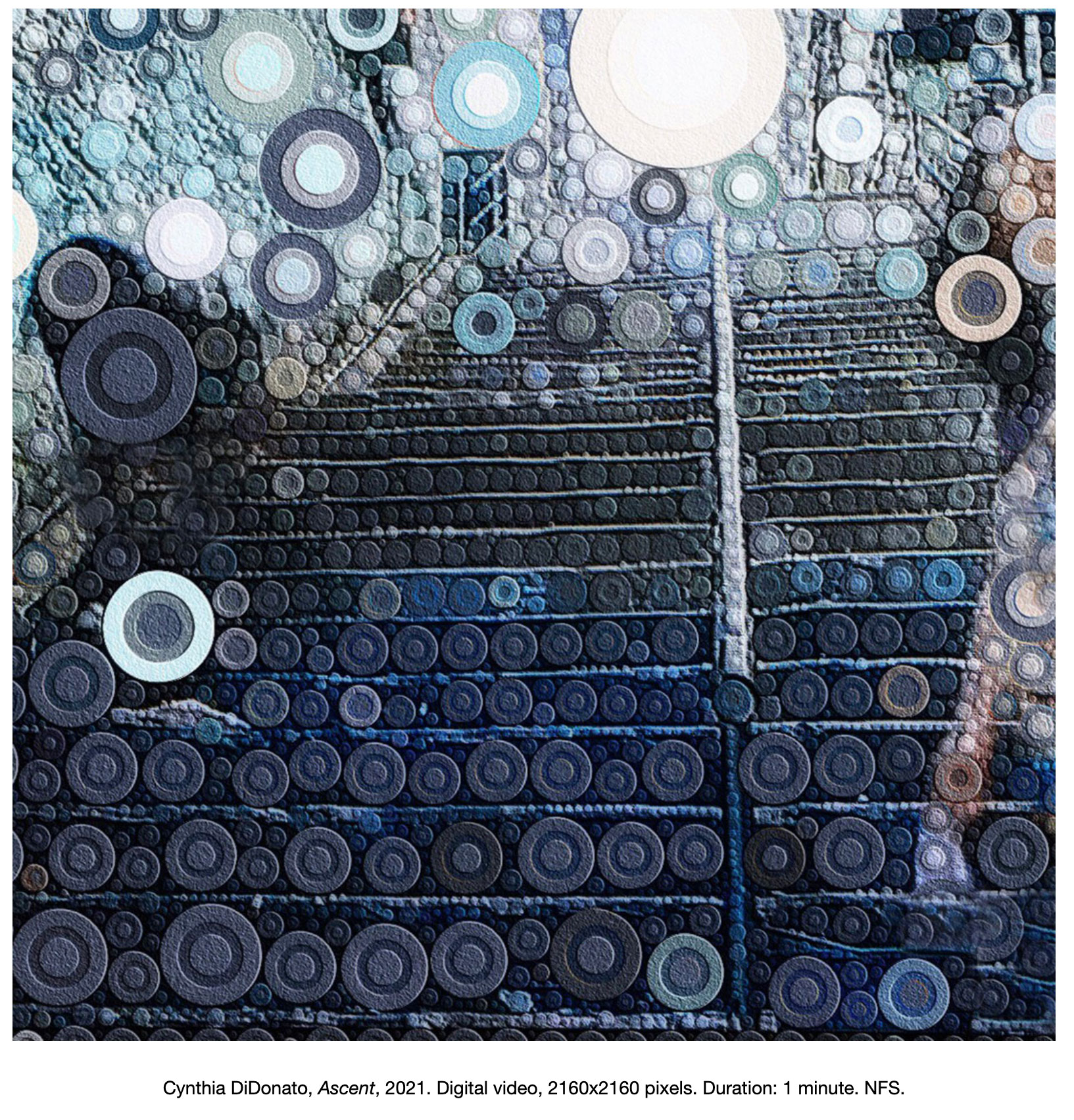
Techspressionist Co-Working sessions are free, Zoom-based gatherings that offer a focused, supportive space for artists to connect and create together. Each session begins with brief intentions, followed by one hour of independent work and an optional share-out. Total time: 1.5 hours.
Founded by: Cynthia Rubin and Cynthia DiDonato
CRITICAL COMMENTARY
Curator, Art Historian, Director, Pollock-Krasner House and Study Center, 1990-2024
In 1928, ruminating on the rapid pace and profound nature of change in the twentieth century, the French poet and philosopher Paul Valéry wrote: “We must expect great innovations to transform the entire technique of the arts, thereby affecting artistic invention itself and perhaps even bringing about an amazing change in our very notion of art.” This prediction so impressed the cultural critic Walter Benjamin that he used it as the epigraph of his famous 1935 essay, “The Work of Art in the Age of its Technological Reproducibility” (as it was originally titled). These writers and others were pondering the same issues that face the artists who now, nearly a century later, self-identify as Techspressionists.
Thanks to digital technologies and the Internet, works of art have become, in Valéry’s formulation, ubiquitous; as he foresaw, “We shall only have to summon them and there they will be.” This level of accessibility requires us to adopt and accept new attitudes toward creative expression. As Benjamin observed, the debate regarding the artistic validity of new media, begun with photography and cinema in the late nineteenth century, centers on the so-called aura of the singular work of art. And the aura of uniqueness remains powerful. Yet a digitally-generated artwork is not a reproduction in the conventional sense—that is, a copy of something else—though it can be, and often is, reproduced in multiples that are indistinguishable one from another.
Hand-made versus mechanical. One-off versus duplication. Such binaries ultimately resolve in light of the works of art themselves. By whatever technique it’s created, Techspressionist imagery generates its own aura, deriving its authenticity from the artist’s intention. Expression is paramount; technology is merely the delivery system. Jackson Pollock faced a similar concern. Frustrated by the focus on his materials and methods rather than the content of his paintings, he insisted, “It doesn’t make much difference how the paint is put on as long as something is being said. Technique is just a means of arriving at a statement.”
 English
 Arabic
 Chinese (Simplified)
 Dutch
Dutch French
 German
 Greek
Greek Hebrew
 Hindi
Hindi Indonesian
 Italian
 Japanese
 Korean
 Persian
 Polish
 Portuguese
 Russian
 Spanish
 Swedish
 Thai
Thai Turkish
 Ukrainian
 Vietnamese